
Buying a Home in North Oak Cliff: What Buyers Should Know
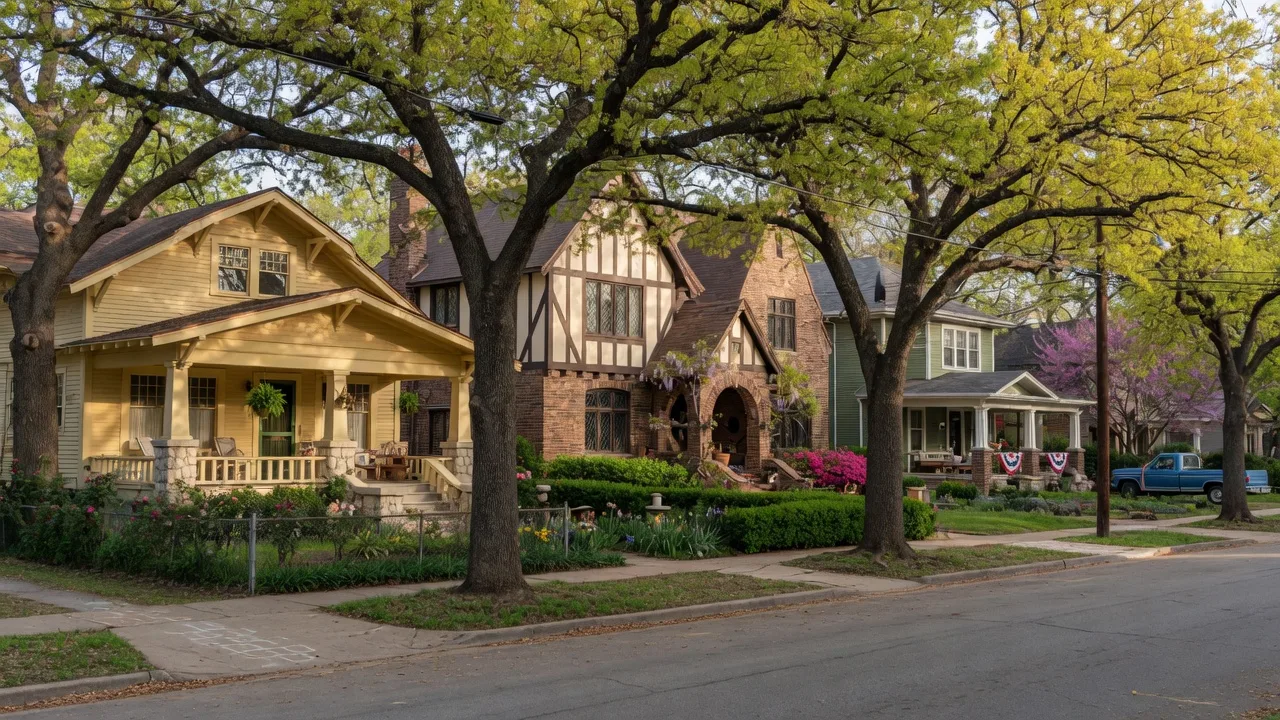
North Oak Cliff is different from any other part of the Dallas urban core. It was developed in the early 1900s as a master-planned community, and the original design still shows: curving streets that break from the city's rigid grid, natural elevation changes that give the neighborhood a distinct topography, and a mature tree canopy that took a century to grow. The Bishop Arts District sits at its center, and the surrounding pockets (Kessler Park, Winnetka Heights, Stevens Park, Elmwood) each bring their own character, price range, and housing stock. For buyers who want a neighborhood with real identity, North Oak Cliff is one of the most compelling options in Dallas.
Over $330 million in development is reshaping parts of the area around Bishop Arts, including new apartments, townhomes, and the Southern Gateway Park, a 5-acre cap park being built over I-35E to reconnect the community that was divided by the interstate in the 1950s. But the neighborhood's soul remains in its historic homes, its independent businesses, and the kind of street-level character that cannot be built from scratch. This guide covers what I walk every buyer through when they are considering North Oak Cliff.
What Makes North Oak Cliff Different
The first thing you notice in North Oak Cliff is the elevation. Most of Dallas is flat, but the terrain here rolls, and the views from the higher parts of Kessler Park and Stevens Park give you a perspective of the downtown skyline that you do not get anywhere else in the urban core. The streets curve and change names as you cross from one pocket to the next, and the tree canopy is among the best in the city.
The second thing you notice is the architecture. North Oak Cliff has one of the best collections of early 20th-century residential architecture in Dallas. Craftsman bungalows, Tudor revivals, Prairie-style homes, and post-war cottages line the streets, many of them meticulously restored and others waiting for someone who sees the potential. The neighborhood was listed in part on the National Register of Historic Places in 1990, and the preservation ethos runs deep in several of the sub-neighborhoods.
What this means for a buyer: you are not buying a cookie-cutter house in North Oak Cliff. You are buying something with history, with quirks, and with a set of maintenance considerations that do not apply to new construction. That is a feature for some buyers and a concern for others. The key is knowing which camp you fall into before you start looking.
The Bishop Arts District: Anchor of the Neighborhood
The Bishop Arts District is a 49-block historic shopping district that was the busiest trolley stop in 1930s Dallas. It fell into decline in the mid-20th century and spent decades in disrepair before a wave of reinvestment over the last 20 years transformed it into one of Dallas's most walkable cultural and culinary destinations. Today it is home to over 60 independently owned businesses: restaurants, coffee shops, art galleries, boutique retail, and theaters.
The dining scene alone is worth understanding if you are considering the neighborhood. Lucia is an acclaimed Italian restaurant on North Bishop Avenue. Oddfellows is a neighborhood staple for coffee and brunch. Encina draws crowds for its blue corn pancakes and lively patio. Hunky's Old Fashioned Hamburgers has been a local institution for years. Zen Sushi and Little Greek Tavern round out the options. And Wild Detectives, a combined bookstore and bar on Davis Street, is the kind of place that gives a neighborhood its personality.
The Texas Theatre on Jefferson Boulevard is a single-screen independent cinema that opened in 1931 and remains one of the neighborhood's most important cultural landmarks. It hosts first-run films, repertory screenings, live music, and comedy shows, and it draws people from across the city on any given weekend.
For buyers, the Bishop Arts District means that daily life in North Oak Cliff can include walkable dining, coffee, entertainment, and shopping in a way that is rare for a neighborhood this close to downtown. The DART Streetcar connects the district to Union Station in downtown Dallas, which adds a transit option that the neighborhood did not have a decade ago.
The Pockets of North Oak Cliff
North Oak Cliff is not one neighborhood; it is a collection of them, and the differences between pockets matter as much here as they do in East Dallas.
Kessler Park
Kessler Park sits at the premium end of North Oak Cliff. It is a historic neighborhood with large estate homes on oversized, hilly lots, many of them designed by notable architects of the early 20th century. The streets wind, the trees are massive, and the views of downtown from the higher elevations are some of the best in the city. Prices here typically start well above $1 million and can reach into the millions for the most significant properties.
Kessler Park is not the entry point to North Oak Cliff. It is the aspirational end of the market. But it is worth understanding because it sets the tone for the neighborhood. If you are looking at Kessler Park, you are likely an experienced buyer who knows what they want and has the resources to maintain a significant historic property.
Winnetka Heights
Winnetka Heights is where many buyers start their North Oak Cliff search. It is a historic district with a strong concentration of Craftsman bungalows, many of them restored or in the process of being restored. The streets are walkable, the lots are generous by urban standards, and the neighborhood has an active preservation community.
Entry-level pricing in Winnetka Heights typically starts in the low $400,000s for homes that need work, with fully renovated bungalows ranging from the mid-$500,000s to the high $600,000s depending on size, finishes, and location. The range is wide, and the condition of the specific home drives the price more than the address.
Stevens Park
Stevens Park is centered around the Stevens Park Golf Course, a public course designed by A.W. Tillinghast in 1924. The surrounding homes are a mix of original architecture and newer construction, and the area offers some of the best values in North Oak Cliff for buyers who want proximity to the Bishop Arts District without paying the premium that the Kessler Park address commands.
Elmwood
Elmwood is a quieter, more residential pocket that sits between the Bishop Arts core and Stevens Park. The homes here are generally more modest in scale, and pricing tends to be more accessible than the peaks of Kessler Park or the most sought-after streets of Winnetka Heights.
Housing Stock: Single-Family Homes and Townhomes
North Oak Cliff is primarily a single-family-home neighborhood, which sets it apart from the condo-heavy markets of Uptown and Oak Lawn. The dominant property types are detached houses: Craftsman bungalows, Tudor revivals, Prairie-style homes, and post-war cottages. Most of these homes date from the 1920s through the 1950s, and the quality of past renovations is one of the most important variables in any transaction.
Newer townhome construction has entered the market in recent years, particularly around the Kessler area and along corridors closer to the Bishop Arts District. The Kessler West development, for example, brought 48 modern townhouses and condos to West Davis Street. These newer properties offer a lower-maintenance ownership structure than the historic homes, with simpler HOA arrangements and no foundation or roof surprises waiting for you. For buyers who want the lifestyle of North Oak Cliff without the maintenance of a century-old house, these are worth a close look.
For buyers coming from Uptown or Oak Lawn, the property-type difference is the most important thing to understand. Most homes in North Oak Cliff have no HOA. That means no monthly fee, but it also means you are solely responsible for the roof, the foundation, the plumbing, the electrical, and the landscaping. The tradeoff works well for buyers who want control over their property. It can be a shock for buyers who are used to having a building association handle those things.
What to Watch For Before You Buy
Buying a historic home in North Oak Cliff comes with a specific set of due diligence items that do not apply to newer construction. Here is what I tell every buyer to pay attention to:
Foundation. Dallas sits on expansive clay soil, and the older foundations in North Oak Cliff have had a century to settle, shift, and sometimes fail. A professional foundation inspection is not optional in this neighborhood; it is a baseline expectation. Look for signs of previous repair, and ask for documentation of past foundation work. Some homes have had piers installed, and the quality of that work matters.
Renovation quality. Many of the homes in North Oak Cliff have been renovated, but the quality of the work varies enormously. A kitchen with custom cabinetry and professional-grade appliances is not the same thing as a kitchen with stock cabinets and DIY countertops. Look behind the surfaces. Open the cabinet doors. Check the electrical panel. A renovation that looks good in photos can hide problems that will cost you later.
Plumbing and electrical. Original plumbing in homes from the 1920s and 1930s may be galvanized steel or cast iron, both of which have finite lifespans. Original wiring may be knob-and-tube, which is a fire risk and may not be insurable. These are not deal-breakers, but they are items that should be factored into your offer and your post-closing budget.
Historic district rules. Winnetka Heights and parts of the surrounding area have historic overlay districts. These districts restrict what you can do to the exterior of a home: siding materials, window replacements, additions, and sometimes paint colors. If you value the freedom to renovate on your own terms, this is worth understanding before you buy.
Flood zone. Parts of North Oak Cliff, particularly properties near the Trinity River levee, fall within FEMA flood zones. Flood zone designation affects insurance costs and can limit financing options. Always verify the flood zone status of a specific property before making an offer.
Walkability and Transit
North Oak Cliff's walkability varies by location, and understanding where you land on the spectrum is part of choosing the right pocket. The Bishop Arts core carries a Walk Score around 80, which puts it in the "very walkable" range: most daily errands, dining, and shopping can be done on foot within the district. Move a few blocks away from the commercial corridors, and the score drops. Most of the residential streets are car-dependent for groceries and errands.
The DART Streetcar connects the Bishop Arts District to Union Station in downtown Dallas, which makes it possible to commute without a car if you work downtown. The Santa Fe Trail offers cycling and pedestrian access into downtown and connects to the broader Dallas trail network, including the Katy Trail.
For most buyers, North Oak Cliff is a neighborhood where you will own a car and use it regularly. But the Bishop Arts core gives you the option of walking to dinner, coffee, or a show on the weekends, and that is a quality-of-life feature that many buyers rank highly.
The Tradeoffs
North Oak Cliff is not for everyone. The commute to North Dallas, Plano, or Las Colinas is longer than it would be from Uptown or Oak Lawn. The DART rail access is not as direct. The older housing stock means higher and less predictable maintenance costs. And the walkability is concentrated around Bishop Arts rather than spread across the entire neighborhood.
What North Oak Cliff offers instead is something that no other urban core neighborhood in Dallas can match: real character. The curving streets, the mature trees, the architectural variety, the independent businesses, the sense of community that comes from a place with a long history and a strong identity. For buyers who prioritize those things over commute time, the tradeoffs are easy to accept.
The key is going into the process with your eyes open. Understanding the pocket, the property condition, the renovation history, and the true cost of ownership before you make an offer is what separates a good decision from an expensive one. That is the kind of context I bring to every transaction.
Is North Oak Cliff Right for You?
North Oak Cliff works best for buyers who want a home with history, a neighborhood with identity, and a community that feels like a community. It appeals to buyers who are willing to do the maintenance work that comes with an older home, and who value the character of a Craftsman bungalow or a Tudor revival over the convenience of a new build.
It is also a neighborhood where local knowledge matters more than in most parts of Dallas. The difference between one block and the next can mean a difference in price, in appreciation potential, and in the kind of community you find yourself in. I have been working these streets for more than 25 years, and I know where the value is and where it is not.
If you are thinking about buying a home in North Oak Cliff, I would be glad to talk through what you are looking for and what is available in the specific pocket that fits you. Get in touch, or explore the full North Oak Cliff neighborhood guide for a deeper look at the area.
Talk soon.