
Living in Kessler Park: A Guide to North Oak Cliff's Historic Neighborhood
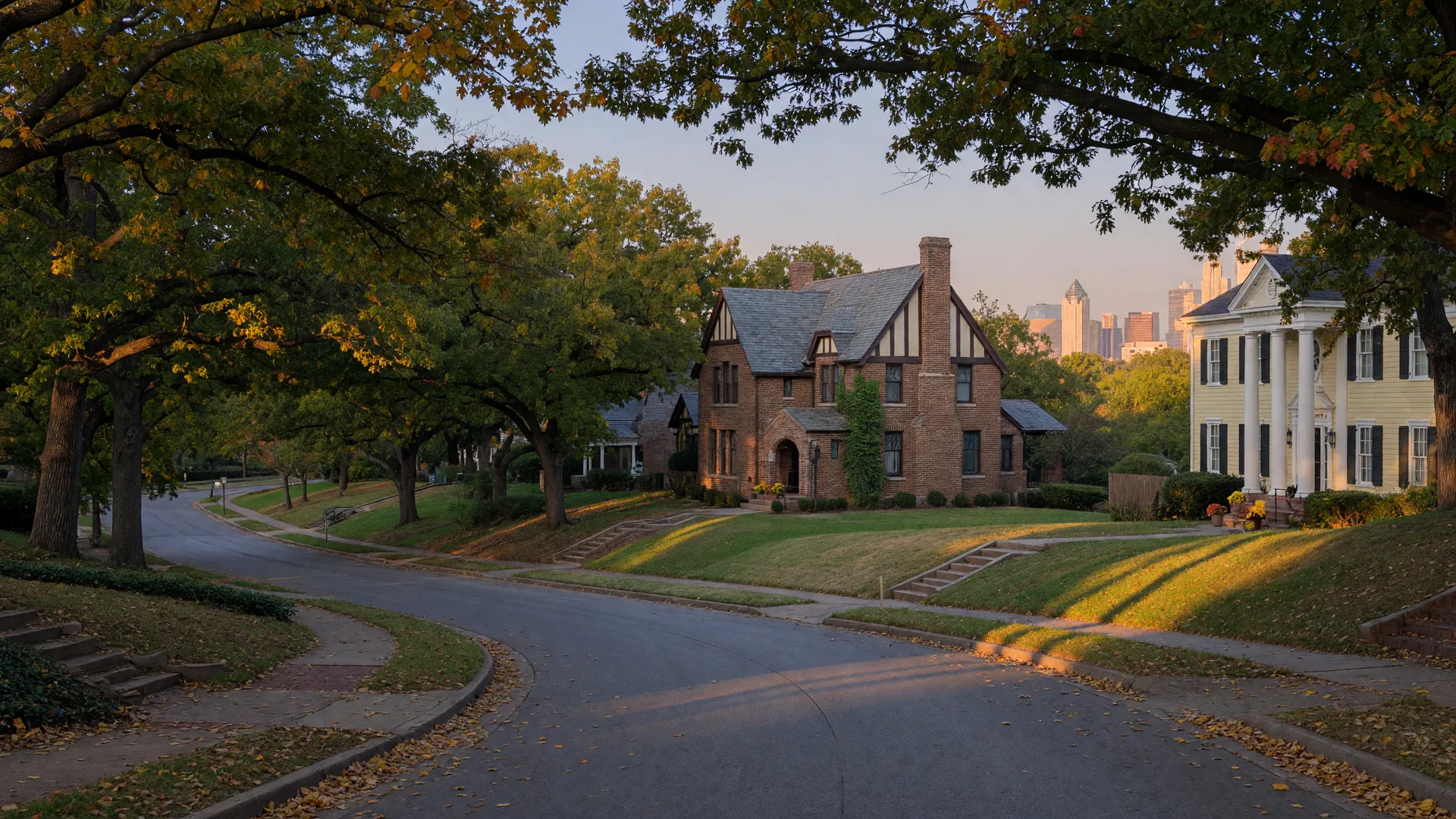
Kessler Park is one of North Oak Cliff's most recognizable historic residential neighborhoods, a pocket of winding streets and revival-style homes just southwest of downtown Dallas. Named for the city planner whose 1909 plan shaped Dallas's parks and boulevards, it developed through the 1920s into one of the most sought-after addresses in Oak Cliff. Here is what buyers should know before they start looking at Kessler Park real estate, whether they are weighing a historic house or simply comparing North Oak Cliff neighborhoods.
I have been working in North Oak Cliff since 2000, and Kessler Park has always held a distinct place in the market. It is a neighborhood for buyers who understand what they want: an established home, a real streetscape, and a part of the city with a century of character behind it. This guide walks through where it sits, what the architecture looks like, and what the market actually looks like in Kessler Park today.
Where Kessler Park Sits and What Bounds It
Kessler Park sits just southwest of downtown Dallas on the North Oak Cliff side of Interstate 30. The streets are hilly by Dallas standards, and the higher elevations offer views of the downtown skyline that you do not find anywhere else in the urban core. That elevation is part of why the neighborhood looks the way it does: curving roads that follow the land instead of fighting it,and mature trees that have had decades to fill in the canopy.
The historic district's boundaries runroughly along Kidd Springs,Stewart,Oak Cliff,Plymouth,Interstate 30,Turner,Colorado,and Sylvan. Within that footprint,the neighborhood is made up of roughly ten separate developments,seven of them bearing Kessler's name,dating from the 1920s through the 1970s. For buyers,that means the streetscape feels consistent but not uniform:the street pattern and architecture hold together because they were built around the same vision over the same era.
Downtown is a short drive from here,and that proximity is one of the neighborhood's quiet strengths. You can be in the middle of the city in minutes,but you are surrounded by one of the quietest,most established residential streetscapesin Dallas. Love Field is also within easy reach,which matters for buyers who travel regularly. It is the kind of location where the commute rarely comes up because it simply is not a problem.
A Neighborhood Named for George Kessler
The neighborhood's name comes from George Edward Kessler(1862 to 1923,,a German-born city planner and landscape architect whom Dallas hired in 1909 to draft a plan for the city's parksand boulevards. The Kessler Neighbors United history recounts how the developments that became this neighborhood began in 1923,when the first additions were dedicated with Kessler's name. Though the full Kessler Plan was never implemented as drawn,its influence runs through the design of this part of the city,and the neighborhood retains a high degree of architectural and design integrity because of it.
That history matters for buyers in a practical way. The neighborhood is a conservation district,which means there are guidelines governing changes to the exterior of homes. For most owners,that is simply part of the deal:the character you are buying into is protected. For anyone planning an addition or exterior renovation,it means working the district's review process into your timeline and planning around it before you commit to a project. It is well worth understanding before you buy a home expecting to rework it.
Revival-Style Architecture on Winding Streets
Kessler Park's housing stock dates primarily from the 1920s through the 1940s,and the architecture reflects that era clearly. You will see masonry bungalows alongside larger revival-style houses:Tudor Revivalwith steep gables,Colonial Revivalwith symmetrical facades,Spanish and Mediterranean-inspired homes with clay tile roofs,and Craftsman houses with broad porches. No two blocks feel exactly the same,and the mix is one of the reasons why the area reads as genuinely distinct rather than a subdivision with one repeating plan.
The lots tend to be oversized by urban core standards,with many homes set well back from the street,particularly on the higher ground. Mature oaks,elms,and the occasional magnolia line the curving roads,and the combination of massive trees,rolling terrain,and substantial houses gives Kessler Park a gravity that smaller,flatter neighborhoods do not have. For someone who values established landscape itself as much as the house itself,that is a large part of the appeal;
Most of Kessler Park is single-family housing. If you are specifically looking for a condo or townhome with low-maintenance living,this is probably not the first neighborhood to focus on. Newer townhome construction has clustered around the broader Kessler area along corridors closer to Davis Street and the Bishop Arts District,but inside the historic core itself,the market is almost entirely houses. That distinction matters when you are building your search list.
The Historic District and What It Means for Buyers
Kessler Park was listed on the National Register of Historic Places in 1994as the Kessler Park Historic District,with a boundary increase the following year. That designation is official recognition of what residents already know: this is one of the best-preserved early 20th-century residential districts in Dallas.
For buyers,the practical takeaway is that the character you see today is likely the character you will have in twenty years. The streets are not going to be widened. The architecture is not going to be replaced block by block. The conservation district process means changes happen deliberately,which protects everyone's investment. When I talk to buyers about exit strategy,and I always do,Kessler Park is one of those neighborhoods where the answer tends to be reassuring: qualified buyers have consistently wanted to live here for a hundred years,and there is no reason that changes now.
For buyers with fixer-upper instincts,the flip side is worth hearing carefully. A century-old home and a conservation district are not a light commitment. Foundation work,plumbing,roofing,and system upgrades vary from house to house,andthe review process means you cannot simply change the exterior however you like. I walk clients through what that actually means property by property,because there is no single answer that fits every house on the street.
Daily Life: Golf, Trails, and Davis Street
Daily life in Kessler Park revolves around some of the best outdoor amenities in Oak Cliff. The Stevens Park Golf Course,one of Dallas's oldest public municipal courses,dates to the 1920sand is known by locals as "Little Augusta" for its rolling terrain and views of the downtown skyline. Whether you play golf or not,its open green space sets the character of the whole area.
The Coombs Creek Trail,a paved path that runs alongside Coombs Creek and the golf course,connects the neighborhood to the Trinity River levee system,branching out toward downtown. I go deeper into how the trail network ties Kessler to the rest of the urban core in myparks and trails guide,but the short version is that this neighborhood sits on one of the more connected outdoor corridors in Dallas.
For restaurants,coffee,and errands,most residents point toward the Davis Street corridor,a few minutes away. Norma's Cafe on West Davis has a loyal following among longtime Oak Cliff residents,and Oak Cliff Coffee Roasters offers a solid neighborhood cup further along the same street. The Bishop Arts District,with its restaurants,shops,and weekend buzz,lies north of there,close enough to use regularly but far enough to keep Kessler Park quiet. For daily basics,Kessler Plaza on West Jefferson Boulevard,just south of the neighborhood,holds a mix of familiar retail options in an old-school shopping center setting.
What the Market Looks Like in Kessler Park
Kessler Park sits at the premium end of North Oak Cliff's market. Most homes are large estate-style properties on oversized,hilly lots,and prices typically start above $1 million and can reach several million for the most significant houses. That places it at the top of the typical range across the urban core,and it is not where most first-time buyers begin their search. It is where experienced buyers land when they know exactly what they want from a neighborhood.
Inventory is consistently low. Homes in Kessler Park do not change hands often,and when a well-priced property comes on the market,it tends to draw serious attention quickly. For buyers,that means the fundamentals matter more than speed:knowing which streets you want,having financing in place,and understanding what you are actually willing to pay for the right house. For sellers,the neighborhood's reputation carries real weight,but condition,pricing,and presentation still determine how quickly a sale happens and at what number.
One thing I always flag to buyers considering Kessler Park is maintenance,and it deserves repeating. A significant historic house on a large lot brings real costs beyond the purchase price:roofing,stone and brick repair,old systems,irrigation,landscaping on hilly ground,and the slower,more deliberate pace of working within a conservation district. None of that is a reason to avoid the neighborhood. It is a reason to buy with your eyes open and your budget built for ownership,not just the mortgage payment.
Who Kessler Park Works For
Kessler Park is for buyers who want an established part of the city with real elevation,real architecture,and real permanence. You are someone who appreciates that a neighborhood can have a distinct identity that has taken a century to build,and who is willing to take on the care that comes with owning a piece of it. You want quiet,winding streets anda canopy of mature trees,with downtown and the rest of the urban core within minutes. If that sounds like you,this neighborhood deserves a serious look.
If you are considering Kessler Park,the best first step is to spend real time in the neighborhood. Drive the streets around the higher ground near the golf course,park beyond the course,and walk the Coombs Creek Trail,grab a coffee on Davis Street and sit for a while. Get a feel for which pockets feel right to you,because each turning differs. I am glad to walk through the current inventory,talk about what the conservation district means for a specific house,and help you figure out whether Kessler Park is the right fit for where you are right now.
Talk soon.