
Swiss Avenue Historic District: A Guide to East Dallas's Grand Boulevard
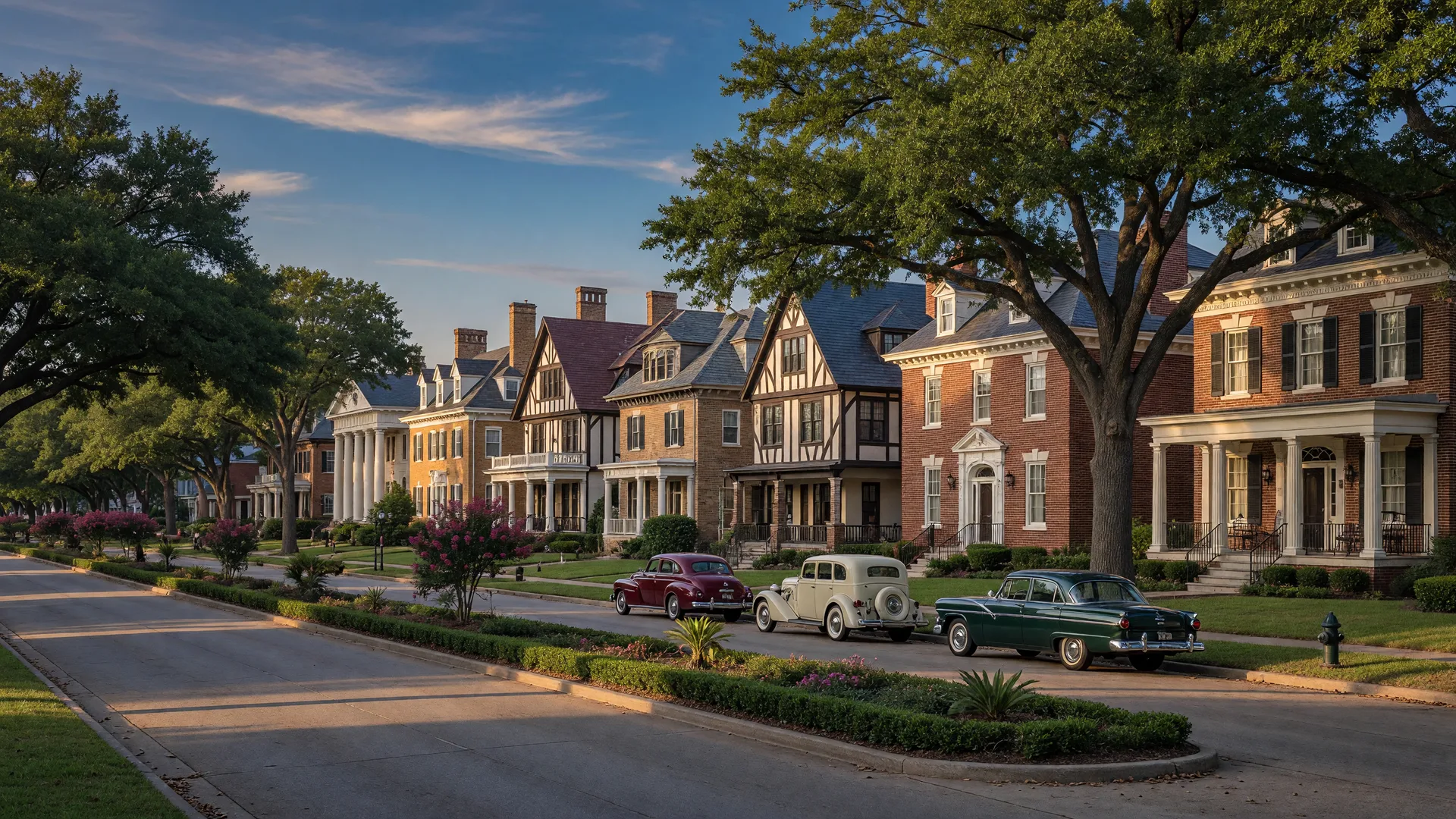
Swiss Avenue is the grandest residential street in East Dallas, and one of the most historic addresses in the entire city. It is a mile-long boulevard lined with early 20th-century mansions, a landscaped esplanade running down the middle, and the kind of architectural variety that collectors and preservationists talk about for years. If you are buying a home in East Dallas and want to feel the full weight of its history, Swiss Avenue is where that history lives.
I have been working in East Dallas since 2000, and Swiss Avenue has always been a neighborhood that sells itself once a buyer sees it. But it is also one of the few places in the urban core where the rules of ownership are different, and buyers need to understand those rules before they fall in love with a specific house. Here is what you should know.
Where Swiss Avenue Sits and What Bounds It
Swiss Avenue runs roughly east and west through Old East Dallas, about two and a half miles northeast of downtown. The historic district is centered on the avenue between Fitzhugh Avenue on the west and La Vista Drive on the east, and it also takes in the stretches of Beacon Street, Bryan Street, Bryan Parkway, and Live Oak Street that face the boulevard. The whole district covers roughly 57 acres.
What makes the setting distinct is the boulevard itself. Swiss Avenue has a wide, landscaped esplanade running down the center, a feature you simply do not find on many Dallas streets. The avenue was paved in brick early in its history, and a private trolley line served the subdivision when it was new. Today the esplanade gives the street a ceremonial feel, and it is one of the reasons the corridor is so recognizable.
Munger Place: The History That Made Swiss Avenue
Swiss Avenue is the heart of Munger Place, a roughly 300-acre subdivision developed starting in 1905 by Robert Munger. Munger did something that was ahead of its time: he imposed deed restrictions that required homes to cost at least $10,000, be owner-occupied, and forbid speculative construction. That made Munger Place the first deed-restricted neighborhood in Texas, and it set a standard that shaped the quality of the housing built here.
The history shows up in the homes. Nearly all of them went up in the 1910s and 1920s, and the architects of that era believed in variety. On a single block you can find Colonial Revival, Georgian, and Neoclassical facades, then a Tudor a few doors down, then a Spanish or Mediterranean-style home, then a Prairie School house. The district holds over 200 homes, and architectural historians have called it one of the finest collections of early 20th-century residential architecture in the Southwest. For a buyer who cares about original character, there is nothing comparable in the Dallas urban core at this scale.
A Street With Real Designation Behind It
Swiss Avenue was Dallas's first locally designated historic district, in 1973, and it was listed on the National Register of Historic Places the following year. It also holds Dallas City Landmark District status and a Texas State historical marker. Those designations are not just plaques. They shape every aspect of owning a home on this street.
The practically important one is the Certificate of Appropriateness, or COA. Any exterior work, anything from a window change to an addition, requires a COA from the Dallas Landmark Commission. The city withholds building permits until the COA is granted, and unapproved exterior changes and demolition are enforced. That is a genuinely different ownership experience than buying an ordinary house in Dallas.
The details matter too. There are specific guidelines for what you can and cannot do to a contributing facade, and the review process adds time to any renovation. If you are buying here planning to renovate, the foundation condition and the quality of any prior restoration matter more than the upgrade potential, because the scope of what you can legally do is defined by the district's rules. I tell every buyer the same thing after decades in these neighborhoods: read the COA requirements before you buy, not after, so that your remodel is about how to make the improvements you want in the way the district allows.
Landmarks Worth Knowing
The most famous house on the street is the Aldredge House at 5500 Swiss Avenue, built in 1917. It was Dallas's first designated historic house museum, and it is preserved by the Dallas County Medical Society Alliance Foundation. The house, with its grand porte-cochère and formal gardens, is one of the most photographed residences in Dallas.
The neighborhood's signature event is the annual Mother's Day Home Tour, which lets you walk through several of the district's restored homes in a single afternoon. If you are considering buying here, the tour is worth putting on your calendar. It is the best real look at how these houses have been maintained, restored, and adapted, and it gives you a sense of the community that fights to keep them that way.
Daily Life Around Swiss Avenue
Swiss Avenue is not a commercial corridor itself. It is a residential neighborhood a few blocks from real shopping and dining. Gaston Avenue to the south has long been the area's practical spine. Espumoso Empanada and Espresso Bar at 3417 Gaston Avenue is a good neighborhood coffee stop, and Toasted Coffee and Kitchen on Ross Avenue is another place locals gather. Lower Greenville's restaurants are a short drive, downtown is minutes away, and White Rock Lake is close enough for regular weekend walks without living right on top of the trail crowds.
For people who work downtown or in the Medical District, the commute from Swiss Avenue is one of the best in East Dallas. The bike and park connections toward the lake give the neighborhood much of the daily convenience of better-known East Dallas areas.
The Market Today
Swiss Avenue is a thin market in the best sense: almost nothing sells, and what does sell is a big number when it happens. Recent listing data shows only a handful of homes on the market at any one time, often in the single digits, with values on the grand corridor running from roughly $1 million to as high as $3 million. Pricing around $425 per square foot has been typical on the corridor in recent reporting.
The rest of Munger Place, the blocks surrounding the boulevard, is a different market. You can find restored bungalows and modest homes well below the corridor range, which is how a buyer who loves this neighborhood but does not need a mansion on the esplanade can still be in it.
What Swiss Avenue does not give you is inventory. Homes here rarely come up for sale, and when one does it often sells to someone who has been waiting and watching. If you are serious, the practical move is to tell me what you are looking for and have your financing in order before a listing appears, because the best house is almost never advertised long.
Who Swiss Avenue Works For
Swiss Avenue is not for every buyer. The price point is high, the housing stock is nearly all older with real upkeep, and the preservation rules mean you cannot treat a home as a blank slate. If you want a low-maintenance condo in Uptown or a new-construction house where you can knock down walls, this is the wrong street for you.
But for buyers who value architectural history and a street that has been the best address in East Dallas for more than a century, Swiss Avenue is in a class by itself. The concentration of original homes, the strength of the community, and the short drive to downtown and the lake all add up. It is the kind of neighborhood where I have watched owners hold for two decades and stay, because nothing new can replace what this street already has.
If Swiss Avenue or Munger Place generally is on your radar, the best first step is to walk the esplanade on a quiet afternoon and get a feel for the house you are drawn to. Then bring a realistic budget and a willingness to work within the district's rules. I am glad to talk through what is currently on the market, what these homes actually require to buy and own, and whether this is the right fit for you. The easiest way is to contact me through the site, and you can compare East Dallas's other pockets on the East Dallas neighborhood page.
Talk soon.