
Living in Junius Heights: East Dallas's Largest Historic District
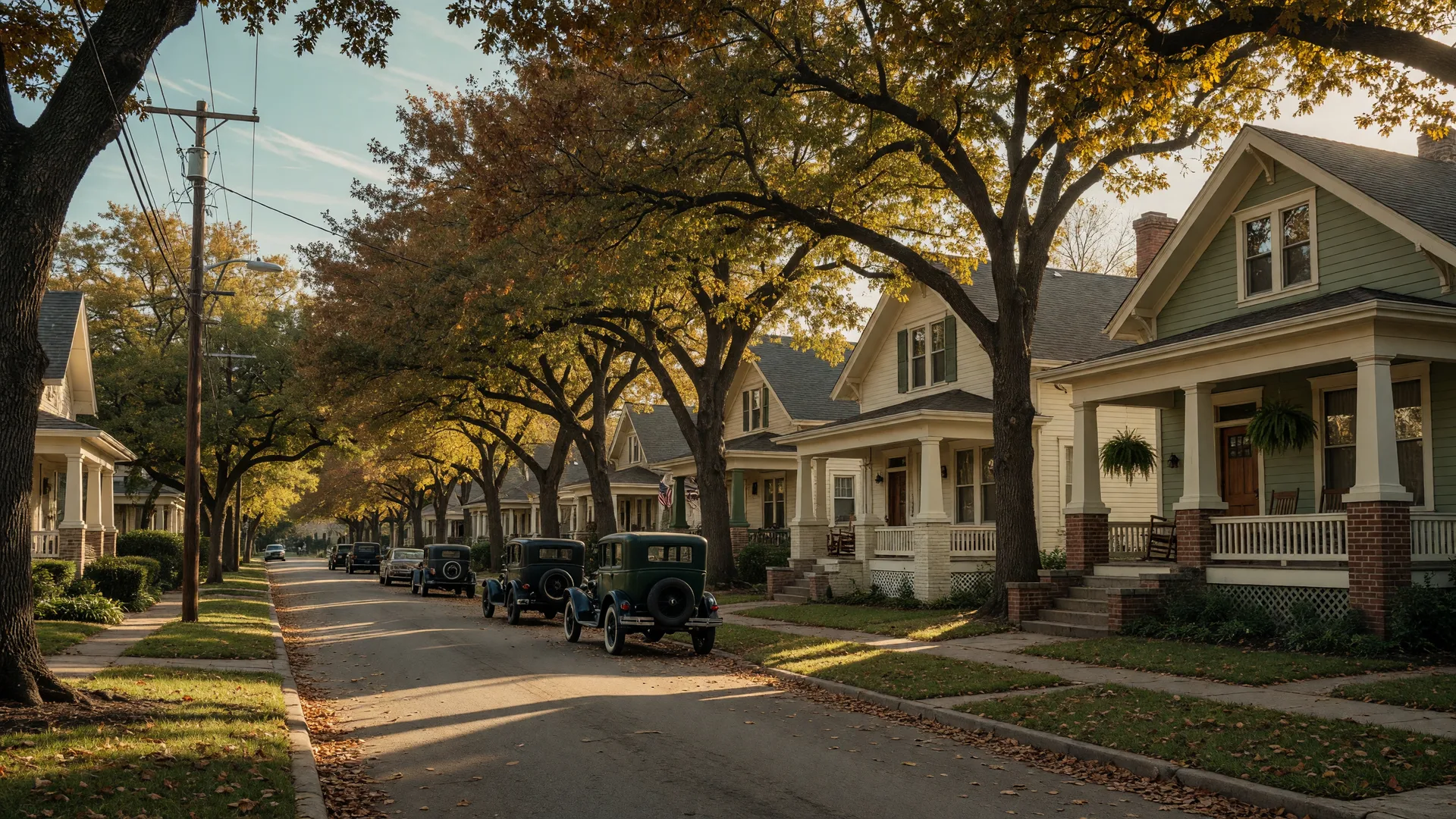
Junius Heights is the largest historic district in Dallas, a 1906 streetcar neighborhood of Craftsman bungalows that sits just below Swiss Avenue in East Dallas. Roughly 700 to 800 homes across about 190 acres make up the district, and it holds the largest surviving collection of Arts and Crafts style houses in the Dallas area. Here is what buyers should know before they start looking at Junius Heights real estate, from the landmark rules to what the market looks like right now.
I have been working these same streets since 2000, and Junius Heights is one of the neighborhoods I point East Dallas buyers to when they want genuine architectural character at a price that stops short of the M Streets and Lakewood. This guide walks through where the district sits, how it started, what the housing stock looks like, what being a landmark district actually means, and what the current market data says.
Where Junius Heights Sits
The district is generally bounded by Gaston Avenue on the north, Henderson Avenue and Reiger Avenue on the west, and Abrams Road, Columbia Avenue, Glasgow Drive, and Nesbitt Drive wrapping the south and east. In practical terms, it sits below Swiss Avenue and Munger Place, and southwest of Lakewood, with Lower Greenville's shops and restaurants a short walk from many blocks. Addresses here fall across the 75214, 75226, and 75246 ZIP codes.
Walkability is one of the neighborhood's selling points, and it varies block to block. Walk Score's neighborhood-level figure for Old East Dallas is 73, which counts as very walkable, and individual addresses on Junius Street range from the 90s at the western end down into the 30s toward the east. D Magazine has called Junius Heights "The Walkable Neighborhood," and that is fair for the blocks closest to Greenville Avenue and Henderson. The eastern end is more car-dependent, so where you land on the street matters.
The 1906 Streetcar Origin
Junius Heights was built as a streetcar development at what was then the eastern edge of Dallas. Developer C. H. Munger, the same family behind the Munger Place Historic District next door, laid out the neighborhood around the Junius Heights streetcar line of the Dallas Consolidated Electric Street Car Company, and the first lots went on sale on September 3, 1906.
The opening sale has become neighborhood legend. Two hundred lots reportedly sold between 12:01 a.m. and 12:45 a.m. that morning, a stretch described at the time as the greatest lot sale in Dallas history. The homes themselves were built mostly from the 1910s through the 1930s, which is why the district reads as a cohesive early-20th-century streetscape rather than a patchwork of eras.
One landmark worth knowing: the large gateway columns that once marked the neighborhood on Abrams Road. They were moved, not demolished, in the early 1970s when Abrams was extended to connect with Columbia Avenue, and they remain a point of pride for the neighborhood association. If you have read my Swiss Avenue guide, you will recognize the pattern: the same early Dallas families who built the grand boulevard also built the bungalow neighborhoods just below it.
The Housing Stock: Craftsman Bungalows and More
This is the reason the neighborhood has a following. Junius Heights holds the largest surviving collection of Arts and Crafts, or Craftsman, style homes in the Dallas area, and around them you will find Prairie, Tudor, Folk, and Queen Anne examples. The classic Junius Heights house is a one-story bungalow with a deep front porch, tapered columns, and a brick or pier-and-beam foundation, often with original woodwork and windows still intact.
What that means for a buyer is simple: you are buying a house with real architectural identity on a street that has kept its shape for more than a century. It also means the market here is almost entirely single-family homes. If your East Dallas search is specifically for condos or townhomes, you will find more of those a few blocks north and west in Old East Dallas, in the Bryan Place, Cityplace, and Expo Park pockets I cover in my Old East Dallas condo and townhome guide. Plenty of people who start in a condo or townhome elsewhere in the urban core end up in Junius Heights when they want a house.
When you tour bungalows here, look at what has been preserved and what has been replaced. Original hardwood floors, period windows, and intact porch details hold value; a renovation that covered original trim or swapped in vinyl flooring may have traded character for convenience. I walk buyers through renovation quality in my East Dallas buying guide, and it matters more in this neighborhood than almost anywhere else in the city.
Being a Landmark District: What the Rules Actually Mean
Here is the practical part that trips people up, so I want to be direct about it. Junius Heights is a landmark overlay district, designated by the City of Dallas in 2006, not a conservation district like Hollywood Heights. The difference matters.
Under the landmark designation, demolition, new construction, renovations, repairs, and site work all have to comply with the district's preservation criteria, and exterior changes require a Certificate of Appropriateness from the city's Landmark Commission. That is a more involved process than the administrative review my Hollywood Heights guide describes for its conservation district. You are not free to do whatever you want to a front porch, a window, or a roofline, and the commission's standards are the ones that have kept the streetscape intact for a century.
For buyers, the takeaway is that a renovation plan should include the approval step and a little patience before work starts. For sellers, it is worth knowing what has actually been approved on the house you own, because exterior work done without the Certificate of Appropriateness can surface at the wrong moment. None of this is a reason to avoid the neighborhood. It is the mechanism that protects the very things you are buying, and most owners come to appreciate that the same rules that restrain them also protect their neighbors and their resale value.
What the Market Looks Like Right Now
According to the most recent Redfin neighborhood data for Junius Heights, which covers the three months ending in March 2026, the median sale price is around $548,000, down roughly 12% from a year earlier, while the median price per square foot has climbed to about $327, up nearly 28%. Homes averaged about 80 days on market in that reporting period, versus 44 days a year earlier. Other sources that track a full 12-month window put the median closer to the $595,000 to $599,000 range, so the number you see depends on the period you are looking at.
The bigger story is the same one I am seeing across East Dallas in 2026: prices per square foot are still climbing, but buyers are no longer bidding in a panic, and homes need a realistic price from day one. There are still entry points here, with properties needing work starting in the low $300,000s and fully renovated bungalows running from the mid-$500,000s up, depending on size, lot, and finish. If you are buying, that means you have time to compare blocks and review what has been done to each house. If you are selling, pricing and presentation matter more than they have in years. I go through the wider East Dallas numbers in my 2026 market update.
Daily Life: Coffee, Dining, and the Neighborhood Around It
The location is the quiet argument for this neighborhood. Lower Greenville is a short walk from the western blocks, with Cafe Duro and Window Seat Coffee anchoring the coffee end of the strip. Henderson Avenue, along the district's north edge, has become a genuine dining row, with long-running Louie's, Hendy's on Henderson, Plomo Quesadillas, and Taqueria La Ventana all within a few blocks. On the Abrams side, White Rock Coffee anchors the Lakewood direction for a longer coffee run.
White Rock Lake and its paved trail network sit a short ride to the northeast, which puts the lake loop and the wider East Dallas trail system in your regular rotation if you run or cycle. The neighborhood association also organizes an annual Junius Heights Home Tour, held every year since 2006, which is the best way to see the interiors of the district's best-preserved houses. Details and dates are posted on the Junius Heights neighborhood association site, and the City of Dallas Office of Historic Preservation maintains the official district page with the full standards.
Who Junius Heights Works For
Junius Heights works for buyers who want a real house with real character in East Dallas, on a walkable block near Lower Greenville, at a price that stops short of the top-of-market M Streets and Lakewood sections. You should be comfortable with the idea that a century-old bungalow will need care, and that exterior work goes through the Landmark Commission. If you appreciate neighborhood rules that protect what drew you there in the first place, this is a feature, not a frustration.
If you are weighing Junius Heights against the M Streets, Vickery Place, or another East Dallas pocket, get in touch. I have been selling in these neighborhoods for more than two decades, and the differences between blocks matter in ways a search portal cannot show you. Send me a note and we can talk through where you want to be, and my East Dallas neighborhood overview and buying guide are good places to start on your own.
Talk soon!