
Living in Lower Greenville, East Dallas: A Guide to the Strip and the Streets Around It
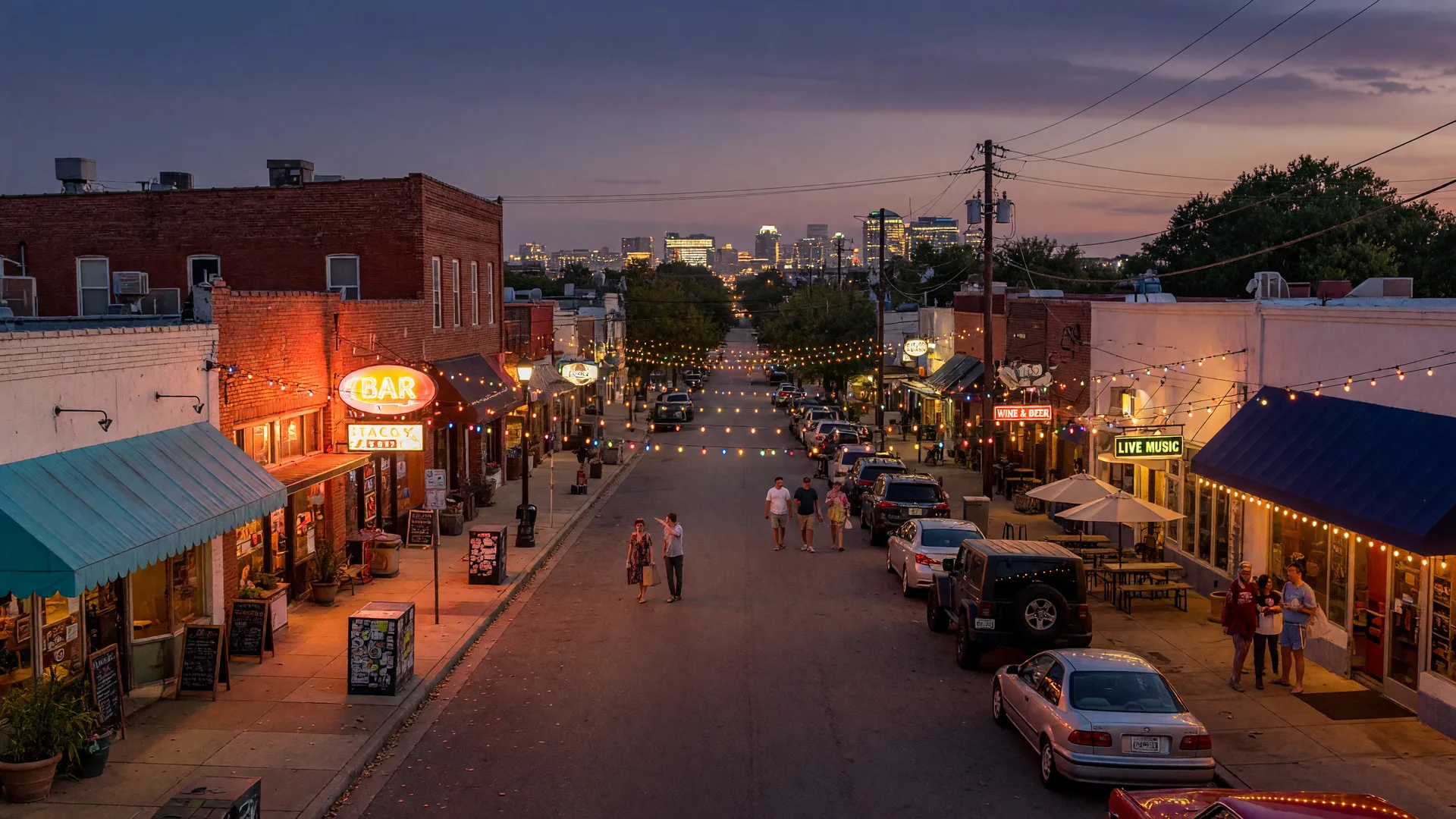
Lower Greenville is East Dallas's entertainment district and one of the most walkable parts of the Dallas urban core. For buyers, it is also a real residential neighborhood: 1920s bungalows and newer townhomes on quiet side streets, with a restaurant and music corridor that has been reinventing itself for more than four decades. Here is what you should know before you start looking.
I have been working East Dallas since 2000, and Lower Greenville is the pocket that surprises people in both directions. Some buyers assume it is all bars and parking problems. Others assume the street is the whole story. The truth is that the homes sit a block or two off the action, the market has been among the stronger ones in the city, and the neighborhood keeps getting better in the ways that matter for resale. Here is the full picture.
Where Lower Greenville Sits and What Bounds It
Lower Greenville is the stretch of Greenville Avenue between the M Streets and Old East Dallas, south of the Mockingbird Lane crossing. The Lower Greenville Neighborhood Association defines the area as Greenville Avenue on the west, Ross Avenue on the south, Skillman Street on the east, and Mockingbird Lane on the north: roughly a mile and a half of the avenue running south from Mockingbird, plus the residential blocks on either side.
Locals make one more distinction worth knowing. The busiest bar-and-restaurant blocks sit between roughly Belmont and La Vista, and the stretch of the avenue south of Belmont Avenue is often called Lowest Greenville. Knowing where that line falls matters when you are choosing a block, because the neighborhood character, the parking, and the prices all shift as you move along the corridor.
A Corridor With a Real History
Greenville Avenue started as a rural road linking East Dallas to the communities to the north, and it carried that role until the North Central Expressway took over in the 1950s. The residential additions around it, Belmont, Vickery Place, and Greenland Hills, were platted in the 1910s and 1920s, and Mockingbird Lane became the neighborhood's northern edge. The name Lower Greenville entered common use in the late 1970s, when the strip began its revival as a nightlife corridor.
The anchor of that revival and of the neighborhood today is the Granada Theater at 3524 Greenville Avenue. The Art Deco building opened on January 16, 1946, with the premiere of Mildred Pierce, and its roughly 950 seats have hosted movies, concerts, and a new life as one of Dallas's best live music rooms since 2004. When buyers ask what holds the corridor together, the Granada is the answer. It has been the constant for eighty years.
The neighborhood also gave Dallas its biggest single-day event. The Dallas St. Patrick's Day Parade started in 1979 as a small Lower Greenville street party and grew into the largest St. Patrick's parade in the Southwest, drawing roughly 125,000 to 150,000 people. It now runs on Greenville Avenue between Blackwell and SMU Boulevard with the Lower Greenville block party around it, and proceeds fund Dallas ISD scholarships. For residents, it is one weekend a year when the strip closes and the whole city shows up, and it is worth planning around.
The Housing Stock: Bungalows First, Townhomes in the Gaps
The strip itself is commercial. The homes are on the streets behind it, and that is where Lower Greenville differs from most of the urban core. This is primarily a single-family neighborhood: classic 1920s bungalows in Belmont Addition, frame cottages and Tudor infill toward the Greenland Hills and M Streets line, and larger homes as you move toward Lakewood Heights. It is the kind of stock where the block you choose matters as much as the house on it.
There is also a steady supply of newer-construction townhomes tucked onto the side streets, which is how many of the buyers I work with get into the neighborhood. Condos right on the corridor are rarer; most of the attached product is townhome style with no shared building. If you specifically want an elevator building, a doorman, or a high-rise, your search will run closer to Bryan Place and Old East Dallas, where the urban core's condo inventory actually lives.
For both the old bungalows and the new townhomes, the exit strategy is the same as it has been for years. Lower Greenville's appeal is location plus walkability, and homes within a five-minute walk of the corridor hold their value better than anything else in this part of East Dallas. When it is time to sell, the buyers who come to see you already know the street. The question is whether your house delivers on what the location promises.
The Dining and Entertainment Corridor
No guide to Lower Greenville is worth much without the food, because the restaurants are a big part of the reason buyers want to live here. The corridor has matured from its bar-era roots into one of Dallas's most dependable dining streets, and it keeps turning over in the right direction.
The Granada Theater remains the anchor for music, and Sundown at Granada on its rooftop is one of the better patios in the city for dinner before a show. Terilli's at 2815 Greenville has held the Italian corner of the corridor for decades, and Sister at 2808 Greenville represents the newer wave of chef-driven cooking that keeps raising the bar.
For everyday meals, Hinodeya Ramen & Bar at 2023 Greenville is a reliable quick dinner, Greenville Avenue Pizza Company at 1923 Greenville covers pizza, Aw Shucks at 3601 Greenville does casual oysters and crawfish, and Gloria's Latin Cuisine at 3715 Greenville has been the Tex-Mex standby for years. Stan's Blue Note at 2908 Greenville and Truck Yard at 5624 Sears Street, just off the strip, are the neighborhood's gathering spots.
Coffee matters here too. Window Seat Coffee at 3018 Greenville, Cafe Duro at 2804 Greenville, and Toasted Coffee + Kitchen at 5420 Ross give you a walking-distance morning routine, which is one of those small things that makes an urban neighborhood actually work.
Walkability, Transit, and Getting Around
This is the part of Lower Greenville that surprises buyers most. Walk Score rates the neighborhood 77 out of 100, Very Walkable, and address-level scores along the Greenville Avenue core run into the low 90s, which puts the strip among the most walkable addresses in Dallas. Transit Score sits in the mid-40s and Bike Score in the mid-60s. Most errands, meals, and coffees are genuinely on foot.
For getting downtown, DART's Route 3 bus runs along the Greenville Avenue corridor, and the rail options are close. SMU/Mockingbird Station on the Red, Orange, and Blue lines sits at the north edge of the neighborhood, Lovers Lane Station is on the east side of the neighborhood along the freeway, and Cityplace/Uptown Station is the closest stop to the southwest. Few buyers in Lower Greenville live car-free, but most of them drive a lot less than they expected.
The one honest caveat is parking and noise near the busiest blocks. Buying two blocks off Greenville versus half a block changes your evenings and your resale pool. The side streets without alleys can be tight, and on event nights the closest blocks to the strip feel it. That is not a reason to skip the neighborhood. It is a reason to think about which block you buy on.
Schools and Daily Life
Lower Greenville sits in two Dallas ISD elementary zones: parts of the neighborhood feed Geneva Heights Elementary and parts feed Mockingbird Elementary. From there, students move to J. L. Long Middle School and ultimately Woodrow Wilson High School, the cluster high school for this part of East Dallas. Street-level assignments vary, so I tell every buyer with school-age kids to confirm the address with the DISD school finder before they commit.
For groceries, the big-box options sit at the edges: Kroger at 5665 East Mockingbird Lane and Central Market at 5750 East Lovers Lane are both minutes away, and the smaller markets along the strip handle the everyday stuff. White Rock Lake and the Santa Fe Trail are a short drive east, and the Katy Trail access at the north end of the neighborhood extends the walkable range considerably. Daily life here is a mix of small-town street and big-city amenity, which is exactly why the neighborhood has held its appeal for so long.
What the Market Looks Like Here
The 2026 data for Lower Greenville has been strong across the board. Published medians for the neighborhood have landed between roughly $820,000 and $900,000 over the past year depending on the source and the month, with year-over-year appreciation running from the mid-single digits to as much as 20% depending on the window you look at. Homes have been going under contract in about 40 days on average, a pace that keeps the market competitive without the frenzy you saw a few years back.
The range inside those numbers is wide, and it is worth understanding before you tour. Smaller bungalows on the blocks closest to the corridor have traded in the mid-$600,000s, while updated homes on the larger lots near the M Streets boundary push past $1 million. Price per square foot in the neighborhood runs around $414 in recent data, which is higher than the East Dallas-wide average and reflects the walkability premium. The right property, priced honestly, still draws multiple offers. An overpriced one sits, and in this neighborhood it sits visibly.
For sellers, the formula is simple and unforgiving: condition and pricing. The buyers coming to Lower Greenville know the corridor and are comparing your house against comparable ones on the same streets. For buyers, the lesson is to move when the right block comes up. The best inventory in this neighborhood is small and sells before most shoppers realize it existed.
What Buyers Should Know Before They Look
Walk the block, not just the house. The difference between one street and the next in Lower Greenville can be the difference between hearing the strip from your porch and not hearing it at all. Tour at dinner time and on a weekend, not just at a 10 a.m. showing.
Budget for old-house reality. The bungalows are a century old, so foundations, wiring, plumbing, and roofs are the questions that matter, not paint. A full inspection is non-negotiable, and so is a realistic conversation about what deferred maintenance will cost in the first year.
Check the HOA paperwork if you buy attached. The townhome inventory on the side streets usually carries an HOA, and the same rules apply as anywhere else in the urban core: read the resale certificate, check the reserves, and vet the board's financial health before you make an offer, not after.
Plan for the calendar. St. Patrick's Day weekend is the neighborhood's biggest event and the strip closes for it. Halloween brings crowds to the bungalow blocks. If the idea of a few big weekends a year bothers you, buy a block away from the action. If it sounds like fun, you will love it.
Is Lower Greenville Right for You?
Lower Greenville works for buyers who want the urban core's walkability with an actual neighborhood around it: bungalows and townhomes on real streets, a music corridor out the front door, and a market that has rewarded owners for decades. It is a weaker fit if you need a high-rise condo, a large lot, or a quiet suburban street, and in those cases I will point you somewhere else just as fast.
If you are comparing neighborhoods for your East Dallas search, spend an afternoon here first: park on one of the side streets, walk the blocks around Belmont, grab a coffee, and catch a show at the Granada. Then we can look at what is actually on the market. I know these streets, the buildings, the HOAs, and the blocks that hold their value, and I am glad to walk the current inventory with you. Reach out when you are ready, or start with the full East Dallas neighborhood guide and the buying guide to get oriented.
Talk soon!