
Living in Vickery Place, East Dallas: Historic Homes and New Townhomes Next Door to Lower Greenville
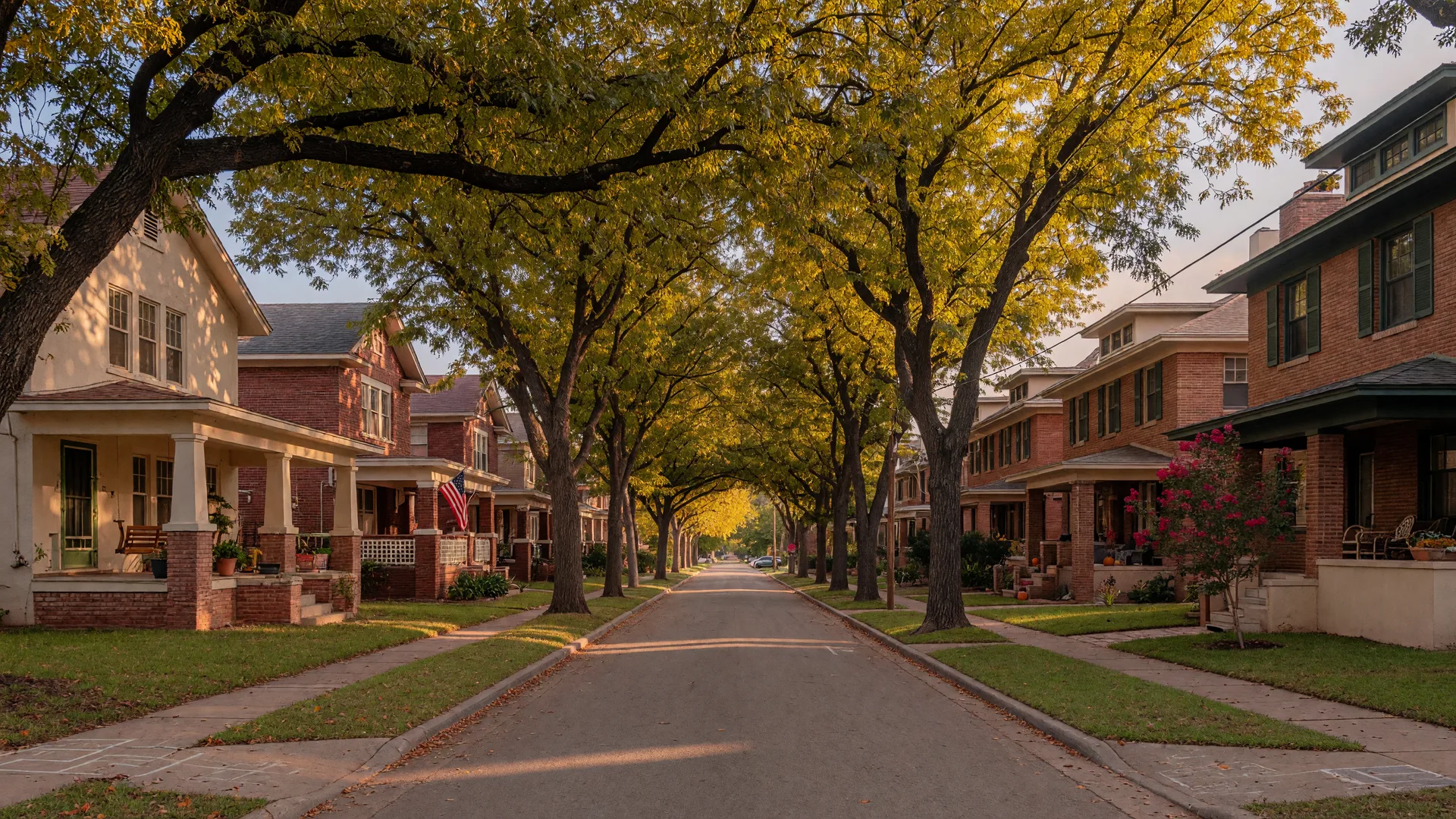
Vickery Place is the East Dallas neighborhood where the 1920s and the 2020s share the same block. Craftsman bungalows and Prairie School houses sit on an old street grid, and in between them, builders have been putting up new townhomes for buyers who want an established neighborhood without an old-house to-do list. It sits one block north of Lower Greenville, borders Henderson Avenue's restaurant strip, and runs straight down to the edge of the Katy Trail's East Dallas connection.
I have worked East Dallas since 2000, and Vickery Place is one of the pockets I send buyers to when they want the urban core lifestyle, a walkable set of streets, and a housing market with real options in both resale homes and brand-new construction. It is also a conservation district, which means the city has rules about exterior changes. Here is what you should know before you shop it.
Where Vickery Place Sits and What Bounds It
Vickery Place sits on the eastern edge of the land between downtown and the M Streets, roughly a block north of Lower Greenville. The usual boundaries are Goodwin Avenue on the north, Central Expressway (US 75) and Henderson Avenue on the west, Belmont Avenue on the south, and Greenville Avenue on the east. Some real estate maps stretch the name across Central Expressway into the Knox-Henderson area, but the neighborhood proper is the grid on the east side of the highway.
That location is the whole point of the neighborhood. Greenville Avenue, with its restaurants and shops, is its eastern front door. Henderson Avenue, one of Dallas's busiest dining strips, is its western edge. Downtown is about three miles away, and the walkability beats almost anything else at this price point in East Dallas.
A Subdivision From 1911 With a Street Grid That Stuck
Vickery Place was platted in August 1911 by the Works-Coleman Land Company, a group whose principals included R. Vickery, J.E. Coleman, Osce Goodwin, J. Houston Miller, and George W. Works. The land was cotton fields before the subdivision, and it was the arrival of streetcar lines in the 1880s that made the area thinkable for development in the first place. The original plat laid out roughly 500 lots, and the wide streets and deep lots of that plat are still what define the neighborhood today.
Because the subdivision is more than a century old and almost entirely built out, Vickery Place has become one of the largest collections of early-20th-century homes in Dallas. It is a different feel from Uptown's high-rises and far from the newer suburban product on the edge of town. What you get instead is a mature, shaded, established street grid, and in East Dallas, that is exactly the character buyers come looking for.
Bungalows, Tudors, and Prairie School: The Housing Stock
The classic Vickery Place housing stock was built mostly between 1915 and 1950: Craftsman bungalows with deep front porches, Prairie School houses with their horizontal lines and low-pitched roofs, and brick or stucco Tudors. The streets are lined with mature pecan trees, and the combination old-tree canopy plus early-20th-century architecture is what gives the neighborhood its identity. There is real variety from block to block, which is part of the appeal; no two streets look exactly alike.
You also see newer infill scattered through the grid: a contemporary on a corner lot here, a new brick townhome there. Because the neighborhood has been filling in for more than a century, the housing stock spans everything from a fully restored 1920s bungalow to a 2026 build on a lot that once held something older. For a buyer, the range is the story.
What the Conservation District Means for Your Renovation
Vickery Place is Dallas Conservation District #15, a city designation that has been in place for years. If you are coming from a neighborhood with no rules, this is the single most important thing to understand about buying here.
The district protects the neighborhood's character by reviewing certain exterior changes. Any exterior alteration, demolition, or new construction requires a Conservation District Work Review Form alongside your building permit, and Development Services staff reviews the work against the district's ordinance guidelines. The process is staff-level and generally straightforward; it is not the heavier Certificate of Appropriateness review that applies to Dallas's historic Landmark districts like Swiss Avenue. For new construction in Vickery Place specifically, the city also asks for existing and proposed grading plans so the builder shows how the lot's drainage works.
What this means in practice: you can update a historic home here, and you can build new, as long as the work fits the district's guidelines. But plan for the review step in your timeline and budget, and do not buy a bungalow expecting to strip it to a blank slate. I walk every Vickery Place buyer through the district rules before they make an offer, because the scope of what you can do to a house here is defined before you own it.
New Townhomes Among the Old Homes
The other thing happening in Vickery Place is new-construction townhomes, and there is no shortage of them. Builders have been putting up compact, multi-level townhomes on infill lots throughout the neighborhood and along its edges, including a modern townhome development near Lower Greenville that has drawn steady buyer attention. When you tour the neighborhood you will see new brick townhomes going up on streets lined with century-old bungalows, which is exactly the mix a lot of urban core buyers want.
That mix matters for buyers who are comparing East Dallas against Uptown or Oak Lawn. In Vickery Place, a new townhome gives you the low-maintenance, lock-and-leave life you might otherwise shop for in an Uptown condo building, but you get it on a tree-lined street with a yard-oriented feel instead of a high-rise lobby. Many of these new communities carry their own small HOA for common areas and exteriors, so ask what the fee covers, just like you would at a condo. The conservation district is a city regulation, not a homeowners association, and it has no monthly fee; the HOA piece, if there is one, belongs to your specific townhome community.
Daily Life: Henderson Avenue, Greenville Avenue, and the Trails
You are not driving to go out to dinner in Vickery Place. Houndstooth Coffee at 1900 North Henderson is the neighborhood coffee stop, Gemma at 2323 North Henderson is the special-occasion dinner spot, Smithy on Henderson at 2927 North Henderson is the steak and cocktail bar, and Taqueria La Ventana at 3012 North Henderson covers the casual taco run. Greenville Avenue, one block east, adds enough restaurants and bars to keep a regular dinner rotation interesting for years.
For outdoor life, Vickery Place benefits from the trail work that now ties East Dallas to the Katy Trail. The University Crossing trail leg starts near Glencoe Park and connects through Mockingbird Station toward the SoPac and Ridgewood trails, which link to White Rock Lake, and the whole network ties back to Uptown. There is more on that connection in my post on the Katy Trail link. The Cityplace/Uptown DART station sits just north of the neighborhood on Haskell Avenue, and Mockingbird Station is a short drive, which makes a car-light commute to downtown genuinely workable.
The Market: Resale Homes and New Construction
Vickery Place resale inventory runs thin, which is normal for a mature neighborhood that people tend to stay in. Renovated bungalows and Tudors have sold from the mid-$400,000s up to $700,000 and beyond, depending on block, condition, and lot, and homes that need work still trade at a discount to their renovated neighbors. It is a market where the specific block and the state of the renovation matter more than the average.
New-construction townhomes typically list at a premium over the neighborhood's resale homes, and you are buying the convenience of a newer build on an established street. The trade-off is the same as it is anywhere: new construction costs more per square foot, and you are betting that the location carries the value. In Vickery Place, the location argument is strong, because the walkability and the proximity to Lower Greenville, Henderson Avenue, and downtown do not change.
Who Vickery Place Works For
Vickery Place works for three kinds of buyers. First, the buyer who wants an old house with real character but does not want to live in a preservation museum: the conservation district rules here are lighter than a Landmark district, and there is more room to make a home your own. Second, the buyer who wants a new townhome in the urban core instead of an Uptown condo, with the same low-maintenance life but a street-level, tree-lined feel. Third, the buyer who needs to be near Lower Greenville, Henderson Avenue, and downtown without paying the premium that Uptown and Oak Lawn condos command.
It is not for someone who wants to tear down and build a massive house without a review process, and it is not for someone who wants a big condo building's amenities, since the housing here is mostly single-family and townhome product. And like every older neighborhood in East Dallas, you have to be honest about maintenance: a 100-year-old bungalow is a different ownership experience than a new townhome, no matter how well it was renovated.
If Vickery Place is on your list, the practical next step is to spend an afternoon on foot along Henderson and Greenville, then walk the neighborhood's own streets to get a feel for which blocks fit you. When you are ready, I am glad to walk you through what is currently available, what the conservation district rules mean for the specific homes you like, and how the price compares with the alternatives. The easiest way to start is to contact me through the site, and you can compare Vickery Place against East Dallas's other pockets, like the M Streets, on the East Dallas neighborhood page.
Talk soon.