
Living in Elmwood, North Oak Cliff: A Guide to the Neighborhood With the Elmwood Loop Trail
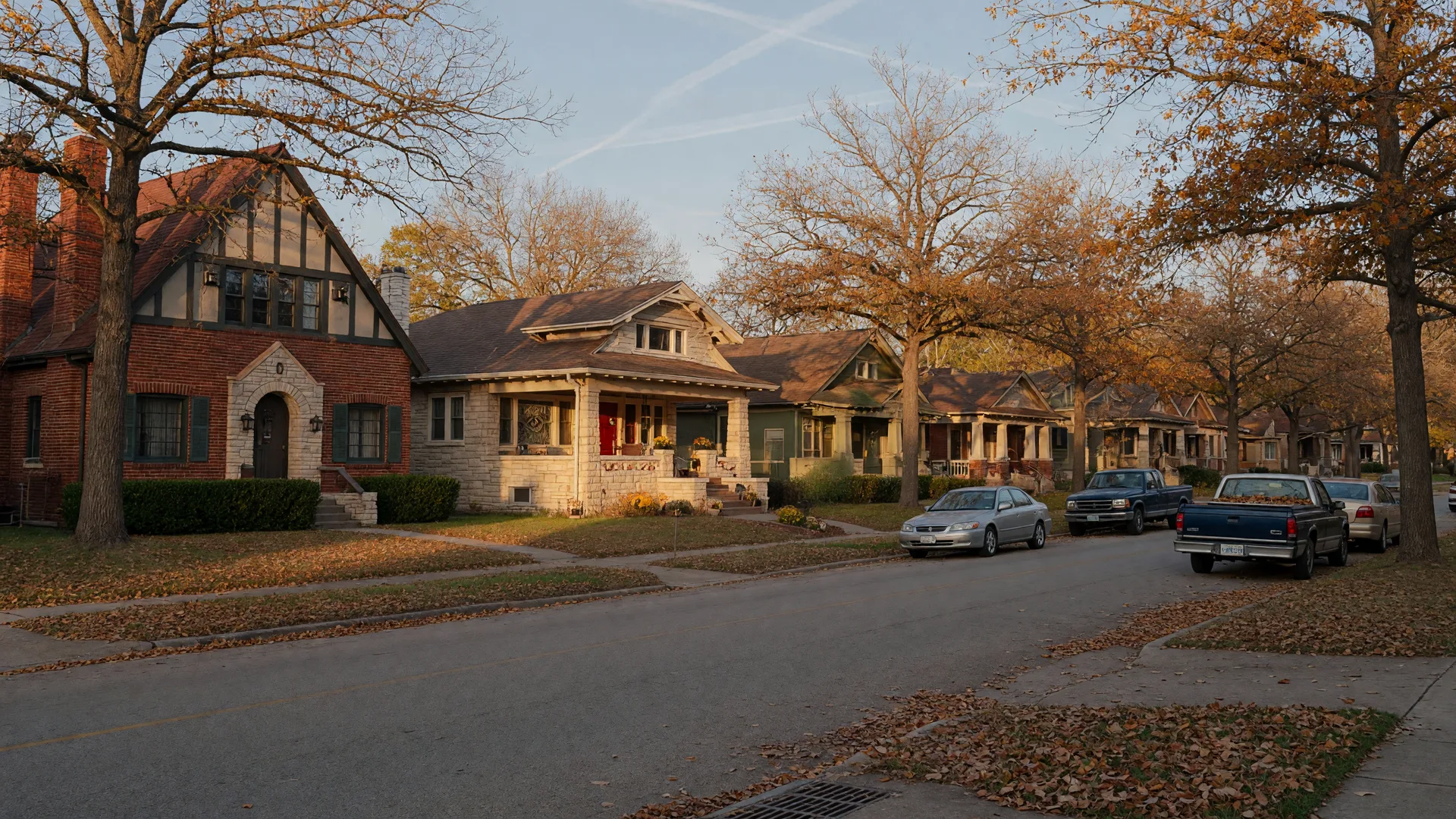
Elmwood is the single-family neighborhood at the heart of North Oak Cliff, roughly six miles south of downtown Dallas and a short drive from the Bishop Arts District. Where most of the Dallas urban core is defined by condos and townhomes, Elmwood is one of the few pockets where the housing stock is almost entirely single-family houses: 1920s bungalows, brick Tudor cottages, and mid-century ranches on tree-lined streets, with a mile-long park trail running through the middle. If you want North Oak Cliff's character with a real house and a yard, this is where you start.
I have worked these neighborhoods since February 2000, and Elmwood is where I send buyers who want the urban core without the elevator. It is also the neighborhood I point out-of-towners to when they say they want to be close to the city but not living on top of it. Here is what you should know before you start looking at Elmwood homes for sale.
Where Elmwood Sits
Elmwood's boundaries are easy to find on a map. The DART Red Line tracks run along its north edge, Illinois Avenue is the south boundary, Polk Street is the east, and Hampton Road is the west. From most of the neighborhood, downtown Dallas is about six miles north, the Bishop Arts District is roughly a mile and a half away, and the Dallas Zoo, in Marsalis Park off the freeway, is an easy drive. The neighborhood's own commercial strip, Edgefield Avenue, cuts through the middle of it, which is why locals call that stretch Downtown Elmwood.
Location is a big part of the argument for this pocket. Elmwood gives you North Oak Cliff's identity, its trees, and its sense of community without the visitor traffic of Bishop Arts, and it keeps downtown close enough that a commute on DART or by car is genuinely practical. For buyers comparing North Oak Cliff real estate, Elmwood is the quiet middle ground between the historic peaks of Kessler Park and the busy commercial core of the Bishop Arts District.
From the Tennessee Dairy Farm to a Planned Neighborhood
Elmwood's story starts with a dairy farm. In 1907, Lindsley Waters established the Tennessee Dairy Farm on this land, a small operation of only about 20 cows that still made history as the first dairy in Dallas to deliver pasteurized milk in glass bottles. A developer named Frank Jester bought the farm in 1924 and turned it into a housing development, and over the next four decades the neighborhood grew in a series of additions into what was at one point Dallas's most populated single-family neighborhood, with roughly 1,400 homes.
Pieces of the farm are still here if you know where to look. An old stone wall and the farm foreman's house survive on Brunner Avenue, and the neighborhood's mature oaks and pecan trees are a legacy of land that was never fully farmed over. Elmwood marked its 100th anniversary in 2024, and Oak Cliff historians have kept the story alive. You will even spot the streets of Elmwood in the late-1980s film Born on the Fourth of July, which shot its parade scenes here.
The Housing Stock: Bungalows, Tudors, and Ranches
Elmwood's housing is nearly all single-family, which is what sets it apart from most of the rest of the urban core. The dominant styles are 1920s and 1930s: brick and stone Tudor cottages, some with stained glass, and craftsman bungalows, plus frame and brick cottages and post-war ranch homes. Build-outs continued into the 1950s, so the streets are more varied than a single-era subdivision.
The practical trade-off buyers face here is age versus character. Many of the houses still have their original charm, and some have been renovated top to bottom. But the oldest homes are now a century old, which means the condition of the foundation, the roof, the wiring, and the plumbing matters more than the paint color. A well-kept original and a full renovation can sit in very different price ranges on the same street.
That variation is the whole point of looking at Elmwood. The neighborhood gives buyers a way into North Oak Cliff that Kessler Park and the most sought-after Winnetka Heights streets do not, with more house for the money and a quieter street to put it on. My North Oak Cliff buying guide walks through how the pockets compare.
The Elmwood Loop: A Trail at the Heart of the Neighborhood
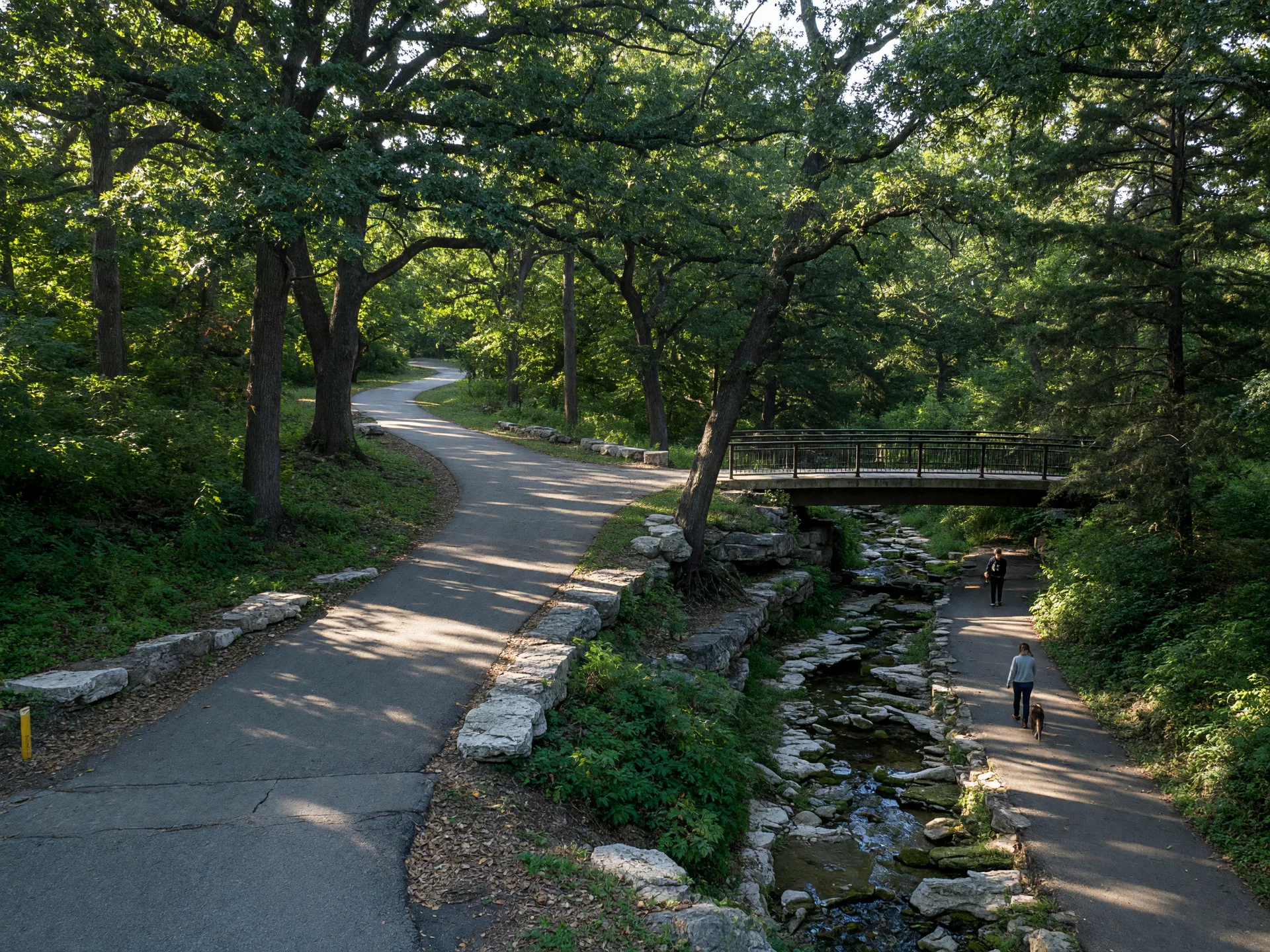
The best part of living in Elmwood is the Elmwood Parkway, a 16-acre linear park that runs through the middle of the neighborhood along the limestone banks of Cedar Creek and Rugged Branch. The park was dedicated in 1945, and in 2012 the city added the Elmwood Parkway Trail, a paved walking and jogging path that forms a roughly one-mile loop along Rugged Drive.
For a neighborhood whose residents do not have big back yards, the trail is the amenity. It is the kind of thing that makes Elmwood feel like a community rather than just a collection of streets, and it is a big part of why the neighborhood holds its value. There are plans to connect the trail south toward Kiest Park, which would make the loop even longer for runners and cyclists. The Elmwood Neighborhood Association keeps the current local calendar if you want to see the park in action.
Daily Life on Edgefield Avenue
Elmwood's commercial core is Edgefield Avenue, the stretch of small shops, coffee, and churches that locals call Downtown Elmwood. Morning coffee is a walk to Slow and Steady Coffee at 1805 South Edgefield, and the neighborhood's anchors include Elmwood United Methodist Church, founded in 1939, and Margaret B. Henderson Elementary, built in 1941 and still the school serving the neighborhood today.
Beyond Elmwood's own strip, everything North Oak Cliff offers is a short drive. The Bishop Arts District, about a mile and a half away, brings Eno's Pizza Tavern, Cafe Brazil, and the district's independent shops and galleries within five minutes. The Dallas Zoo at dallaszoo.com is an easy drive for a weekend outing, and Kiest Park is close by for sports and play. The practical point for buyers is that Elmwood lives quieter than Bishop Arts while still being minutes from it.
What the Market Looks Like at the End of 2026
Elmwood is a small market, and the numbers reflect it. Public data through late 2026 shows a median sale price between roughly $330,000 and $360,000 depending on the source and the window, with Redfin's most recent figure around $328,000 (down about 6% year over year) and Homes.com's 12-month median closer to $359,000 (up about 3%). The price per square foot tells a firmer story: it is up meaningfully year over year, around $287 on Redfin's numbers, which is the clearest signal that buyer demand for the neighborhood has been growing.
Days on market run roughly 38 to 45 days, a healthy clip. Inventory stays thin, usually single digits to low double digits of active listings at any given time, and fewer than 30 homes sell in a typical 12-month stretch. That low inventory is the main reason prices hold here. When something well-priced comes to market, it moves; when something is overpriced, it sits, because the buyer pool is small enough that pricing mistakes get punished.
As with any small pocket, block-to-block differences matter more than the median. A fully renovated 1940s brick cottage on a quiet loop and a dated 1920s bungalow on the same street are different products, and the spread can be substantial. Newer infill, including a recently built four-bedroom house, has listed well above the median, which tells you where the top of the market sits. My North Oak Cliff market update and the Dallas urban core market report cover the wider picture.
Schools: The Kimball Feeder Pattern
Elmwood is served by Dallas ISD, and the neighborhood elementary school is Margaret B. Henderson Elementary at 2200 South Edgefield Avenue, a pre-K through fifth grade campus that was built in 1941 and sits right in the heart of Downtown Elmwood. Henderson feeds into the Justin F. Kimball High School cluster, with Zan W. Holmes and T.W. Browne serving as the middle school options in that feeder pattern.
Attendance zones can change, so I always tell buyers with school-age kids to confirm the assignment for the specific address with the Dallas ISD school finder rather than assume. A house on one side of a boundary and a house on the other can feed different campuses.
What Buyers Should Check Before Buying in Elmwood
Because the housing stock is old and mostly single-family, the due diligence list looks different than it does for a condo or townhome. Start with a full inspection, and pay particular attention to the foundation, which is the biggest variable on a century-old Dallas house, plus the roof, the HVAC, and the age of the electrical panel and plumbing. Walk the property after a hard rain if you can, because drainage and grading matter on sloping lots near the creek.
Check the trees too. Mature oaks and pecans are one of the neighborhood's best assets, but large trees close to a house are a maintenance and insurance conversation you should have before closing, not after.
For sellers, the same low inventory that supports prices cuts both ways. A well-priced, well-maintained Elmwood house sells in weeks. A house that needs work still sells, but the buyer pool for a dated property is thinner, and pricing it as if it were already renovated is the fastest way to sit on the market. Price to the condition, and let the renovation premium reward the next owner. My North Oak Cliff selling guide walks through the neighborhood-by-neighborhood strategy.
Who Elmwood Works For
Elmwood fits first-time buyers who want a real house in the urban core at an entry price, families who want a yard, a park trail, and a school a short walk away, and anyone who loves North Oak Cliff but finds Bishop Arts too busy to live in. It is also a strong fit for buyers who looked at Uptown and Oak Lawn condos, liked the idea of the city, and decided they want four walls and a lawn instead of a condo association. I cover that comparison in more depth in my East Dallas versus North Oak Cliff piece.
It is not the right fit if you want a new-build house on a large lot, if you are set on a specific school assignment outside the Kimball cluster, or if the walkability of Uptown is the whole point of moving. Elmwood is a neighborhood where you drive for groceries and most errands; it is not a no-car pocket like Uptown. For the walkable end of the urban core, the Uptown buying guide is a better place to start.
How I Would Start the Search
Start the way I do: park at the Elmwood Parkway trailhead, walk the loop once, then have coffee on Edgefield Avenue and drive the side streets in the evening when people are home. The difference between a renovated Tudor and a fixer bungalow, and between a quiet loop and a busier through-street, is something a map will not show you.
The North Oak Cliff neighborhood overview and the story of how I work cover the wider picture, and I am glad to walk the current Elmwood inventory with you whenever you are ready. Send me a note and we will look at real houses, not just the listings.
Talk soon!