
Condo Insurance in Dallas: What HO-6 Covers and Costs in Uptown, Oak Lawn, East Dallas, and North Oak Cliff
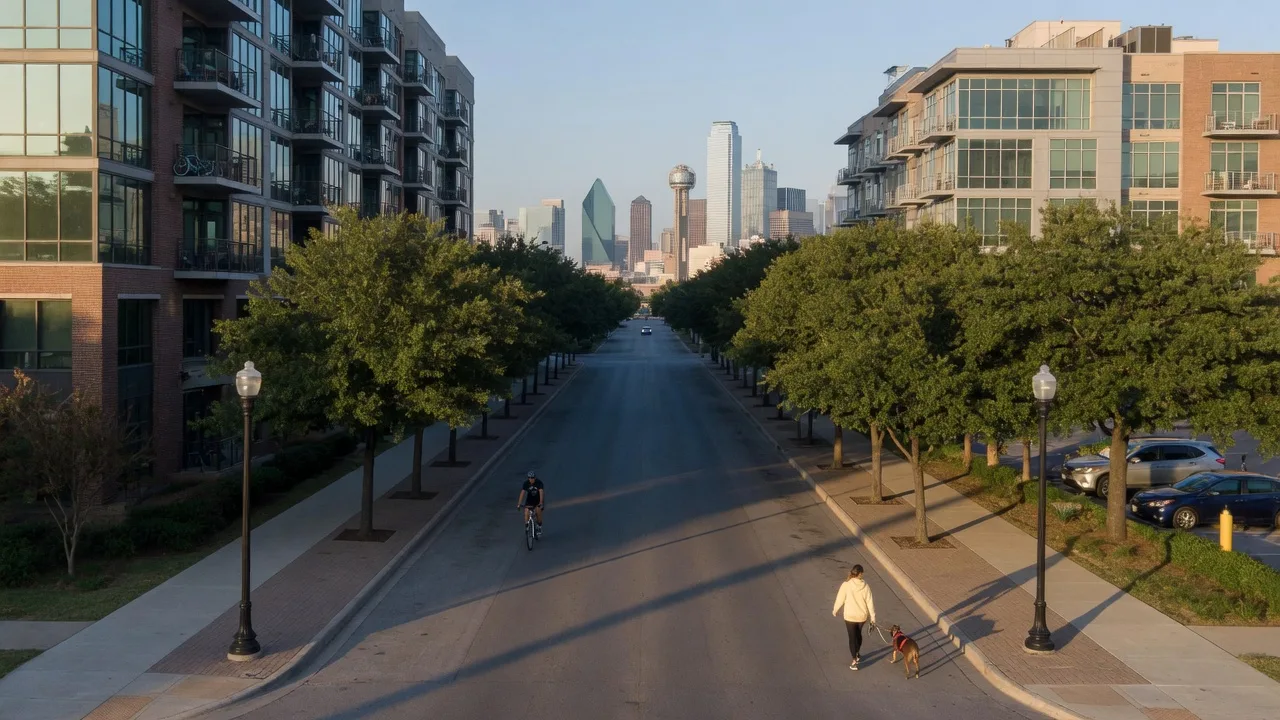
Condo insurance, written on the HO-6 form, is the policy that covers the inside of your unit in Uptown, Oak Lawn, East Dallas, or North Oak Cliff: the drywall, the floors, the cabinets, your personal property, and your liability. It works alongside the building's master insurance policy, which the HOA pays for out of the monthly fee you already budget for, and a lender will not fund a condo purchase without it. Here is what an HO-6 policy covers, what it costs in Dallas right now, and the questions to ask before you make an offer.
I have been buying and selling condos and townhomes in these neighborhoods since February 2000, and insurance is the line item that catches more urban core buyers off guard than almost anything else in the budget. Nobody tours a unit in Uptown and falls in love with the master policy declarations page. But the difference between a roughly $1,000-a-year policy and a much larger problem shows up the first time a hailstorm hits the building. Here is what I want you to understand before you commit to a condo, a townhome, or a house in the urban core.
What an HO-6 Policy Covers
An HO-6 is the unit-owner form of homeowners insurance, and it is built around one idea: the association owns the outside of the building, and you own the inside. The policy covers the improvements from the interior surface of the walls inward. That means drywall, paint, flooring, cabinets, countertops, built-ins, and the plumbing or wiring inside your unit where the master policy does not pick it up. It also covers your personal property, your personal liability, medical payments to others, loss of use if your unit is not habitable, and a loss assessment endorsement.
What it does not cover is just as important to know before you buy: the building exterior, the structural framing, the roof, and the common areas are the master policy's job, not yours. Flood coverage is a separate policy everywhere in Texas, so have a direct conversation with your agent about it even in a building that sits well away from any mapped flood zone.
The Master Policy: Walls-Out vs. All-In
This is the part that confuses buyers, and it is the part worth understanding. In Texas, most association master policies are written on a bare walls-in or walls-out basis. That means the building's policy covers the skeleton: exterior walls, roof, foundation, common areas, framing, and the wiring and plumbing inside the walls, right up to the inner surface of the drywall. Everything from the drywall inward is your HO-6's responsibility.
Some associations carry an all-in or all-inclusive master policy, which also covers the unit's original fixtures, flooring, and sometimes cabinetry as originally installed. In that case your HO-6 mostly needs to cover upgrades, personal property, and liability. The difference materially changes how much coverage you need to buy, so ask for the declarations page of the master policy before you make an offer, not after. Texas association insurance is governed by Chapter 82 of the Texas Property Code, and the association's governing documents will say which structure applies to your building.
What Texas Law and Your Lender Require
Texas law requires the association to insure the common elements, generally at least 80 percent of replacement cost, but it does not require the association to insure the improvements inside your unit. There is also no Texas statute that forces you, as the owner, to carry an HO-6. What actually makes the policy non-negotiable is your lender and, often, the building's own declarations and bylaws, which frequently require unit owners to keep a policy in force.
Fannie Mae, whose underwriting rules cover most conventional condo loans, requires a unit-owner policy whenever the master policy does not cover the interior of the unit or the master policy carries a per-unit deductible. Under Fannie Mae's updated rules, the HO-6 must cover at least the greater of the cost to restore your unit's interior or the building's per-unit deductible, capped at $50,000 per unit. The Fannie Mae selling guide section on individual unit insurance spells out the requirement. FHA applies a similar standard for the buildings it approves.
This is part of the condo financing eligibility picture I check on every urban core purchase, and it is why some buildings that look great on paper only qualify for certain loans. My guide to condo financing in Dallas walks through what determines whether a building is lendable at all, and insurance sits right next to it on the checklist.
What Condo Insurance Costs in Dallas
Recent rate analyses put the Dallas average around $1,000 a year, roughly $85 a month, against a Texas statewide average that runs about $900 to $1,050 depending on the source and the method. Most Texas condo policies land in an $800 to $1,200 range. Your actual premium depends on the size of the unit, the quality of the finishes, the coverage limits you choose, the deductible, and your own claims history, so the spread between two otherwise similar units in the same neighborhood can be meaningful.
Get quotes from at least two insurers while you are in your option period, and read the policies for coverage rather than price alone. The cheapest quote in Dallas is a bad deal if it leaves you underinsured against the building's per-unit deductible. A policy that covers the interior to its restoration cost, keeps liability at a sensible limit, and carries a raised loss assessment endorsement is worth real money in Uptown, Oak Lawn, East Dallas, or North Oak Cliff, where one Texas hailstorm can touch every roof in a block.
Loss Assessment Coverage: The Endorsement Most Buyers Skip
This is the one I always explain twice, because it is the coverage that pays off exactly when a condo owner's budget is most exposed. A loss assessment endorsement pays your share of a special assessment the association levies when damage to common property exceeds what the master policy covers. In Texas the classic trigger is hail. If a storm damages the roofs across a building and the master policy carries a large deductible, commonly $25,000 to $50,000 or more, the shortfall comes back to the owners as a special assessment.
A standard HO-6 policy typically includes only $1,000 to $2,000 of loss assessment coverage, which is nowhere near enough for that scenario. Raising the limit to $50,000 through the loss assessment endorsement costs only about $10 to $20 a year extra, and in my view it is the single best-value endorsement available to a Dallas condo buyer. Two notes: the coverage is usually written on a claims-made basis, meaning it attaches to the date the assessment is levied rather than the date of the storm, and it does not replace the financial review of the association. My guide to special assessments on Dallas condos explains how these charges are structured, and the HOA vetting guide shows you how to check a building's reserves before you would ever need the endorsement.
Insurance Questions to Ask the HOA Before You Buy
Before you write an offer on a unit, put these questions on your list and get the answers in writing:
- Is the master policy walls-out or all-in? This decides how much interior coverage your HO-6 must carry.
- What is the per-unit deductible? If it is $25,000 or more, your HO-6 limit has to be sized accordingly.
- When was the master policy last re-bid, and has the building filed hail or wind claims in the last five years?
- Does the HOA fee include the master policy premium, and has that line item jumped recently?
- Does the building carry flood coverage, and do any units sit in a mapped flood zone?
- What does the resale certificate say about insurance?
Most of this shows up in the resale certificate review, and I go through what to look for in my guide to resale certificates. You do not need to become an insurance underwriter. You need to know the structure, the deductible, and the claims history, because those three decide how much HO-6 coverage you actually need.
How Insurance Fits Into the Buying Process
Practically, insurance arrives late in the transaction but should be priced early. Your lender will want to see a paid policy or a binder before closing, and a condo loan cannot fund without it. During your option period, send the master policy declarations page to your insurance agent, get two quotes, and confirm the loss assessment limit and the deductible math before you commit, not the week of closing.
For sellers, the same facts are closing speed. Have the resale certificate and the building's insurance details ready before you list, because buyers' agents will ask, and a quick, complete answer keeps the transaction moving. On a condo or townhome in Oak Lawn or Uptown, insurance questions are a normal part of the buyer's due diligence, not a red flag.
The HO-6 premium is a line item, usually a modest one, sitting next to the HOA fee that pays for the master policy. Understanding both before you fall in love with a unit is exactly the kind of product knowledge I bring to every search. If you are looking at condos or townhomes in Uptown, Oak Lawn, East Dallas, or North Oak Cliff and want someone who walks you through the whole cost picture, not just the mortgage, get in touch. Start with the Uptown condo buying guide, the Oak Lawn guide, or the neighborhood pages, and we will look at real buildings and real numbers together.
Talk soon!