
Living in Kidd Springs: A Guide to North Oak Cliff's Park-First Neighborhood
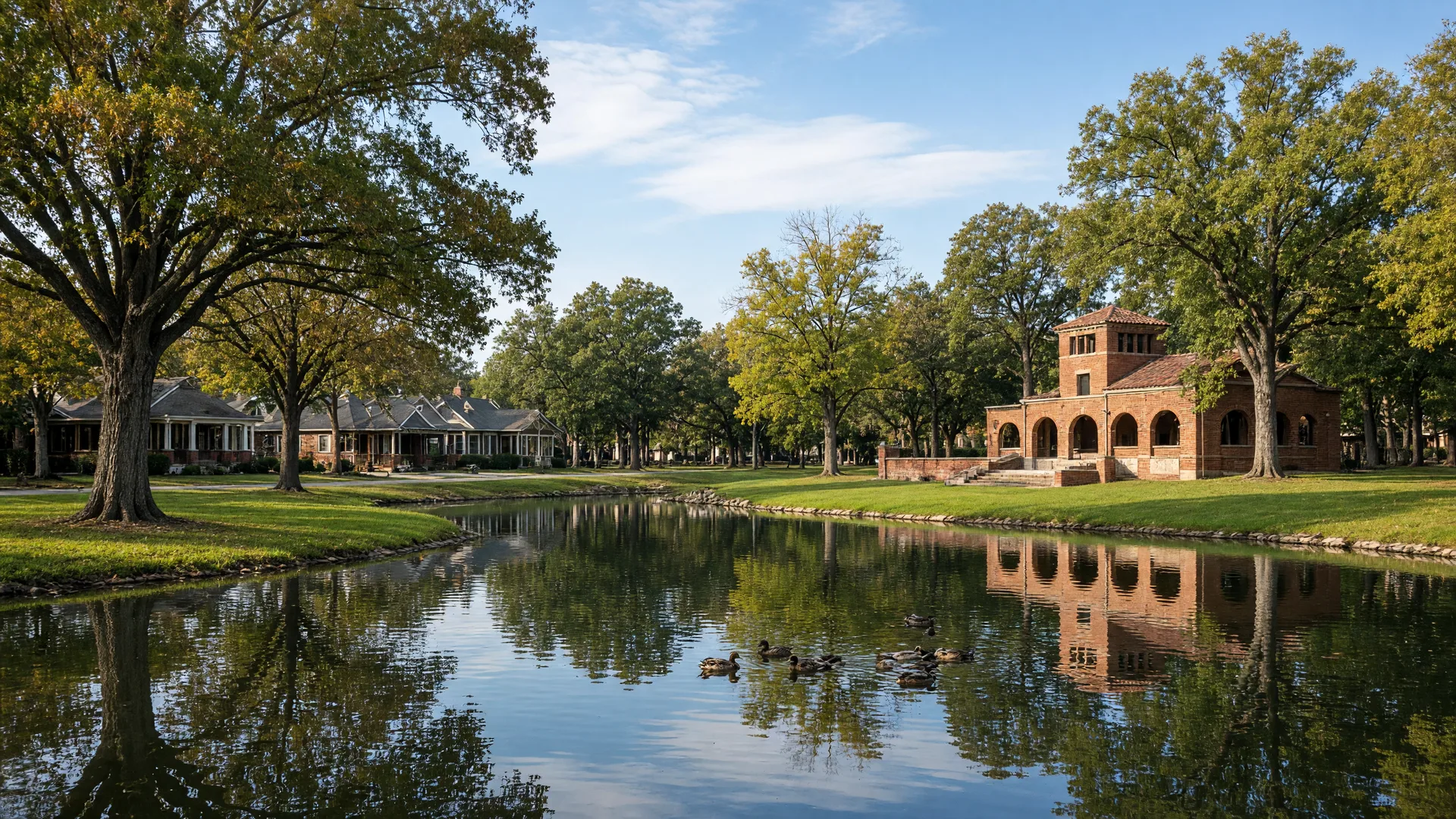
Kidd Springs is the North Oak Cliff neighborhood that grew up around a natural spring, and the park at its center still sets the tone for everything around it. For buyers looking at North Oak Cliff homes, it offers quiet single-family streets of Craftsman bungalows, a 31-acre park with a spring-fed lake, and a location that keeps Bishop Arts, the Dallas Zoo, and downtown Dallas within an easy drive or a short streetcar ride. I have been working these neighborhoods since 2000, and this is the guide I wish I could hand every buyer who discovers the neighborhood by driving through the park.
The neighborhood name comes up constantly in my North Oak Cliff conversations, usually because someone has walked the park, loved it, and wondered what the houses around it are actually like. Here is the honest version: the history, the housing stock, the market, and the daily life, all in one place.
Where Kidd Springs Sits and What Bounds It
Kidd Springs sits in the middle of North Oak Cliff, bounded by West Davis Street on the south, West Colorado Boulevard on the north, Zang Boulevard on the east, and Tyler Street on the west. In practical terms, the neighborhood is a handful of blocks deep on either side of the park, and the park is the anchor: most streets dead-end or curve toward it, which is why the neighborhood feels quieter than its central location suggests.
The position is genuinely useful for a buyer. Bishop Arts and its restaurant strip are a short drive to the east off Davis Street, the Dallas Zoo sits a few minutes southwest, and downtown Dallas is a straight shot up Zang and through the Jefferson corridor. The Dallas Streetcar runs free every 20 minutes, seven days a week, on the 2.45-mile line connecting Bishop Arts to Union Station downtown, and the closest stops are a short drive or bike ride from most of the neighborhood. Compared to the other North Oak Cliff pockets I cover, Kidd Springs is one of the most central addresses you can pick.
A Neighborhood Grown Around a Spring: The History
The whole neighborhood is named after Colonel James W. Kidd Sr., who bought about 200 acres of farmland beside the spring in 1874. The spring itself is the reason any of this exists. In the mid-1890s, the Kidd Springs Fishing and Boating Club dammed the spring into a small lake, and the site grew into a private amusement park with a spring-fed swimming pool, a dancehall pavilion, a carousel, and bumper cars. Dallas families came out from the city for the day, and the park became one of Oak Cliff's best-known gathering places.
The City of Dallas bought the park in 1947 for $125,000 and expanded it to its current 31.32 acres by 1970. Here is a detail most people do not know: the spring still feeds the lake today. It sits just outside the park on North Vernon Street, and a pipe carries the spring water into the lake, so the water at the center of the neighborhood is the same water that drew people here in the 1890s. For a buyer, that history is not trivia. It explains why the neighborhood looks the way it does, and why the park has always been the most protected piece of land around.
The Park Today: A Spring-Fed Lake, Pools, and Gardens
Kidd Springs Park is the rare city park that functions like a small-town square. The spring-fed lake holds ducks and turtles and is ringed by walking trails, and the park adds real amenities around it: a Japanese Garden created in 1969 and later restored, a Butterfly Garden planted in 2006, and the Kidd Springs Recreation Center, built in 1965 and renovated since. There are two playgrounds, tennis and basketball courts, a baseball diamond, soccer fields, and plenty of picnic areas.
The aquatic center is the summer anchor. The current pool was built in 1958, and the facility was renovated in 2019, with a modern pool complex and slides. On a June Saturday, the park is full of families, and that is exactly the point: this is a neighborhood where the biggest amenity is free and a block away. For sellers, that shows up in buyer demand, and homes within a short walk of the park consistently draw the most attention. For buyers, it is the single best reason to look here instead of a street farther from the water.
The Housing Stock: Bungalows and the Miller-Stemmons Historic District
The housing is mostly early 20th-century single-family construction: Craftsman bungalows, Colonial Revival and Tudor-era homes, most of them built between the 1910s and the 1920s, with a modest amount of newer infill on the edges. This is a real streetcar-era neighborhood, and the houses show it, with front porches, deep lots, and mature trees along the curbs.
The centerpiece for history-minded buyers is the Miller-Stemmons Historic District, in the heart of the neighborhood. Developed by Leslie A. Stemmons and Thomas S. Miller Jr. as the Miller Stemmons Addition of more than 200 homes, it was listed on the National Register of Historic Places on June 17, 1994. The district is roughly bounded by West Davis Street, Woodlawn Avenue, and the Neches and Elsbeth streets, and it holds mostly one- and two-story single-family homes from 1910 to the late 1930s, plus some 1920s apartment buildings, with Bungalow and Craftsman architecture dominant.
One practical point for buyers and sellers here: a National Register listing is a recognition, not a local overlay. It does not impose design review the way a Dallas conservation district does, but qualified rehabilitation work on contributing buildings can become eligible for federal tax incentives. That means a buyer who wants to restore a house has real room to work, and a seller who has maintained the period details has something to lead with. What you should budget for in these older houses is the same thing in every neighborhood like this: foundation, electrical, plumbing, and windows. Those are where the real money goes, and I walk clients through every one of them before they make an offer.
What the Market Looks Like in North Oak Cliff Right Now
Kidd Springs sits in the 75208 ZIP, which is the core of the North Oak Cliff single-family market. The neighborhood-wide September 2026 picture from my North Oak Cliff market report shows a market with real room to move: a median sold price of $437,000, closed sales at 96.4% of list price, median days on market of 38, and months of supply at 6.7, with new listings carrying a median list price of $475,000. Local agent reports put well-priced homes in the 75208 ZIP at roughly 20 to 30 days on market, so the spread between the best-priced houses and the overpriced ones is wide.
What that means in plain language: this is not a bidding-war neighborhood right now, and it is not a fire-sale neighborhood either. A Kidd Springs house that is priced on the evidence and presented well sells. One priced against what a seller hopes to get sits, and it shows up in the days-on-market number. If you are buying, take the extra time to compare foundations and systems, not just paint colors. If you are selling, price on the evidence and lead with the park and the period details. My North Oak Cliff buying guide and selling guide both go deeper on the process.
One honest note for condo and townhome buyers: Kidd Springs is a single-family neighborhood. The condo and townhome inventory in North Oak Cliff sits closer to Bishop Arts and the Davis corridor, which is covered in my Bishop Arts guide. If you want a lock-and-leave home, that is where the search starts, not here.
Daily Life on Davis, Jefferson, and Tyler
The neighborhood's own streets are quiet, and the daily-life action is a few minutes away on the corridors that bound it. The Kessler on Davis Street is one of the best live-music rooms in Dallas and is walkable from the north end of the neighborhood. The Texas Theatre on West Jefferson Boulevard, the 1931 single-screen cinema where Lee Harvey Oswald was arrested on November 22, 1963, now runs repertory films and live events and is a few minutes west.
For everyday errands, Davis Street has the long-running Norma's Cafe for breakfast and lunch, and Stock & Barrel and Nova for dinner and a drink. Coffee is covered on the neighborhood's own edges: Hola Cafe Dallas on North Tyler Street, Xaman Cafe on Jefferson, and Slow and Steady Coffee a few blocks east on Edgefield. And the Dallas Streetcar makes a downtown or Bishop Arts night out possible without finding parking.
Schools: The Sunset Feeder Pattern
Kidd Springs is in the Dallas ISD Sunset High School feeder pattern. The neighborhood's elementary attendance zone is Rosemont, with lower grades at the Rosemont Lower campus and upper grades at the campus on Ranier Street; middle school is W.E. Greiner Exploratory Arts Academy on South Edgefield Avenue; and high school is Sunset High School on West Jefferson Boulevard. Attendance boundaries can shift with DISD realignments, so confirm the exact address with the district's school site locator before you commit, but the Sunset feeder pattern is what applies to the neighborhood today.
Is Kidd Springs Right for You?
Kidd Springs works best for buyers who want a single-family house in North Oak Cliff with a genuine park at the center of the neighborhood: families who will use the pool and the playgrounds every week, buyers who love older homes with real character, and sellers who have kept up the systems and can present a house that is ready. It is a slower-moving market than the peak years, which is exactly why it rewards buyers who do the homework instead of rushing.
If you are comparing North Oak Cliff neighborhoods, start with the North Oak Cliff neighborhood guide to see how Kidd Springs fits alongside Bishop Arts, Kessler Park, Winnetka Heights, and Elmwood. Then get in touch and I will walk the current Kidd Springs inventory with you, tell you honestly which houses are worth your time and which need more work than they are worth, and help you put together an offer you can stand behind. That is the way I have worked these streets for more than 25 years, and it has not changed.
Talk soon!